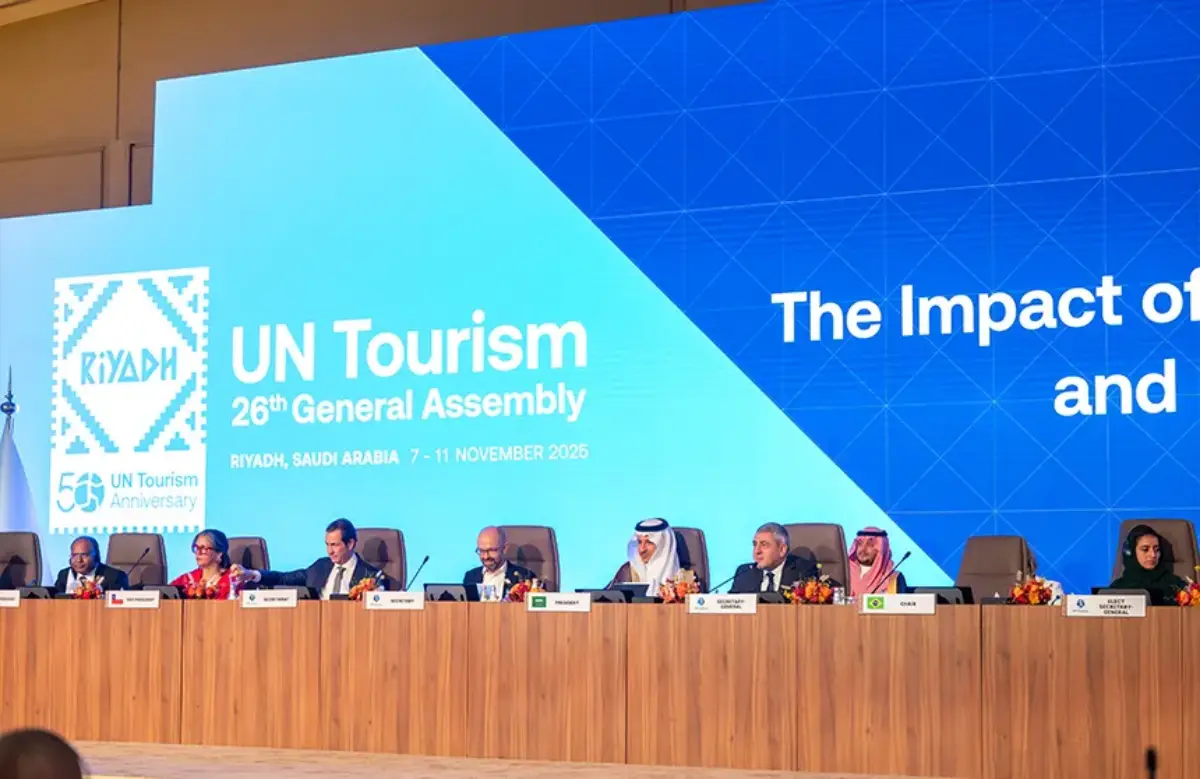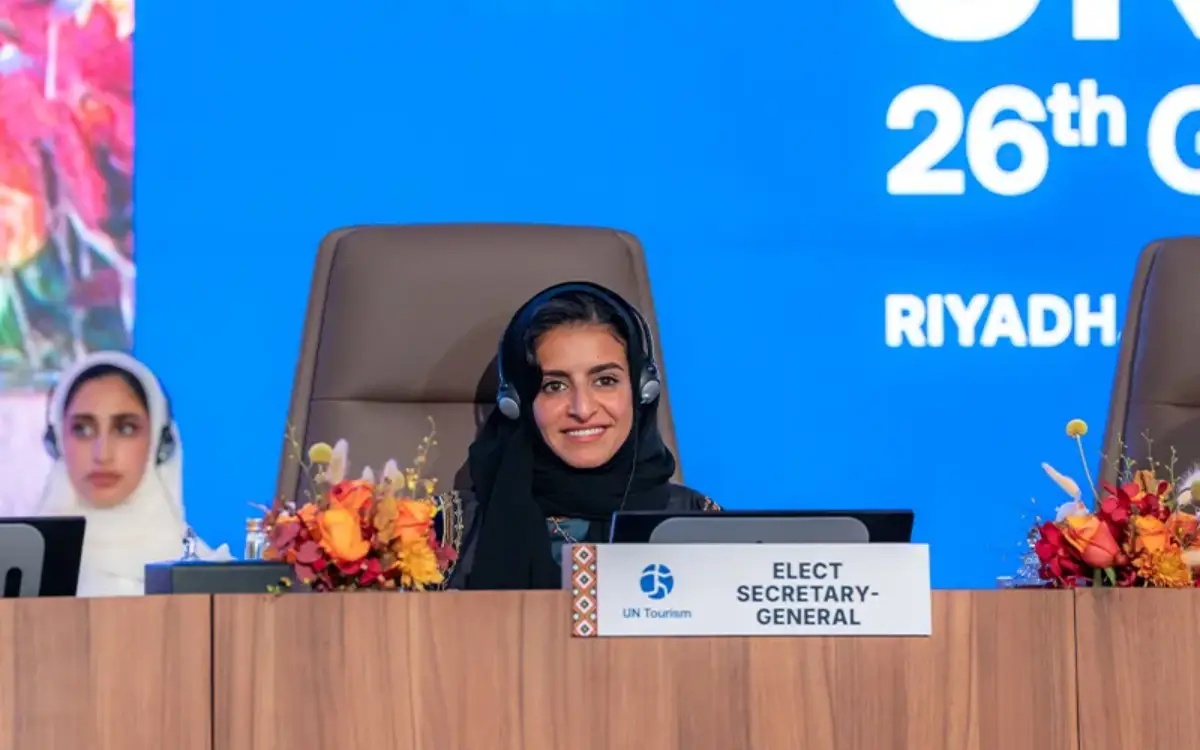
Shaikha Al Nowais has been confirmed as the next Secretary-General of UN Tourism, becoming the first woman to lead the United Nations Specialized Agency for tourism in its 50-year history. Her appointment was ratified by the Organization’s General Assembly during its 26th session in Riyadh, following her nomination by the Executive Council earlier this year. She will begin her term at the start of 2026.
The announcement marks a significant milestone for UN Tourism, which oversees global collaboration and policy development in the travel and hospitality sector. Al Nowais’ selection received strong backing from Member States, highlighting broad support for her leadership and the priorities she outlined for the Organization’s next phase.
Historic Appointment and Strategic Priorities
Al Nowais brings decades of private-sector experience to the role, including her position as Corporate Vice President at Rotana Hotels, one of the Middle East’s largest hospitality groups. She also chairs the Abu Dhabi Chamber’s Tourism Working Group and serves on the boards of the Abu Dhabi Businesswomen Council and Les Roches Hospitality Academy, giving her a wide perspective on tourism, entrepreneurship, and education.
Addressing delegates at the General Assembly, Al Nowais described her appointment as a “shared moment” for the global tourism community. “This is a triumph for all of us,” she said. “It is a shared moment that reflects our collective vision for a stronger, more connected, and more compassionate world of tourism. Together, we represent the hopes of millions whose lives are touched by this sector. Together, we carry the belief that tourism, at its best, can uplift nations and unite humanity.”
Outlining her plans for the 2026–2030 mandate, Al Nowais emphasized five core priorities: responsible tourism, capacity building, technology for good, innovative financing, and smart governance. These focus areas, she said, are designed to make the global tourism industry more inclusive, resilient, and people-centered. Her agenda signals a continuation of UN Tourism’s broader mission to align the sector with sustainable development and equitable growth.
UN Tourism’s Future Direction
The appointment was the highlight of the opening day of the 26th General Assembly, where 160 Member States gathered to review the Organization’s progress and future goals. The session followed the 124th meeting of the UN Tourism Executive Council, its highest decision-making body, which provided an update on ongoing programs supporting investment, innovation, and education across member countries.
Al Nowais also paid tribute to outgoing Secretary-General Zurab Pololikashvili, who has served since 2018. She acknowledged his “vision, commitment, and role in strengthening UN Tourism’s voice and global presence,” noting that her own tenure will build on the foundation established during his leadership.
The transition comes at a pivotal moment for international tourism. The sector continues to recover from the long-term effects of the COVID-19 pandemic while addressing new challenges tied to sustainability, digital transformation, and workforce development. According to UN Tourism, global travel demand has returned to near pre-pandemic levels, with growth led by emerging markets and evolving traveler priorities focused on authenticity and environmental responsibility.
Founded in 1975 and rebranded as UN Tourism in 2024, the agency serves as the UN’s principal body for promoting responsible, inclusive, and sustainable tourism. It works with governments, private stakeholders, and international institutions to advance tourism’s contribution to global economic growth, employment, and cultural exchange. The appointment of Al Nowais represents both continuity and change — reaffirming the organization’s global mission while signaling a more inclusive leadership approach.
As the first woman to lead UN Tourism, Al Nowais’ tenure is expected to bring renewed attention to gender equality and empowerment within the travel and hospitality industries. Her appointment has been widely seen as a milestone for representation at the highest levels of global tourism governance and a reflection of shifting dynamics within the sector.
Delegates attending the General Assembly will continue to discuss policy frameworks, sustainability initiatives, and digital transformation strategies over four plenary sessions and several specialized committee meetings. The proceedings are expected to shape UN Tourism’s work plan for the next five years, guided by the new Secretary-General’s vision of inclusive, technology-driven growth.
Al Nowais will assume office on 1 January 2026, succeeding Pololikashvili for the 2026–2030 term. Her appointment signals a new chapter for UN Tourism as it works to adapt the global tourism system to a more equitable, resilient, and sustainable future.