JetBlue officially retired its Embraer E190 aircraft on 9 September 2025, completing the final revenue flight between New York’s JFK and Boston Logan International Airport.
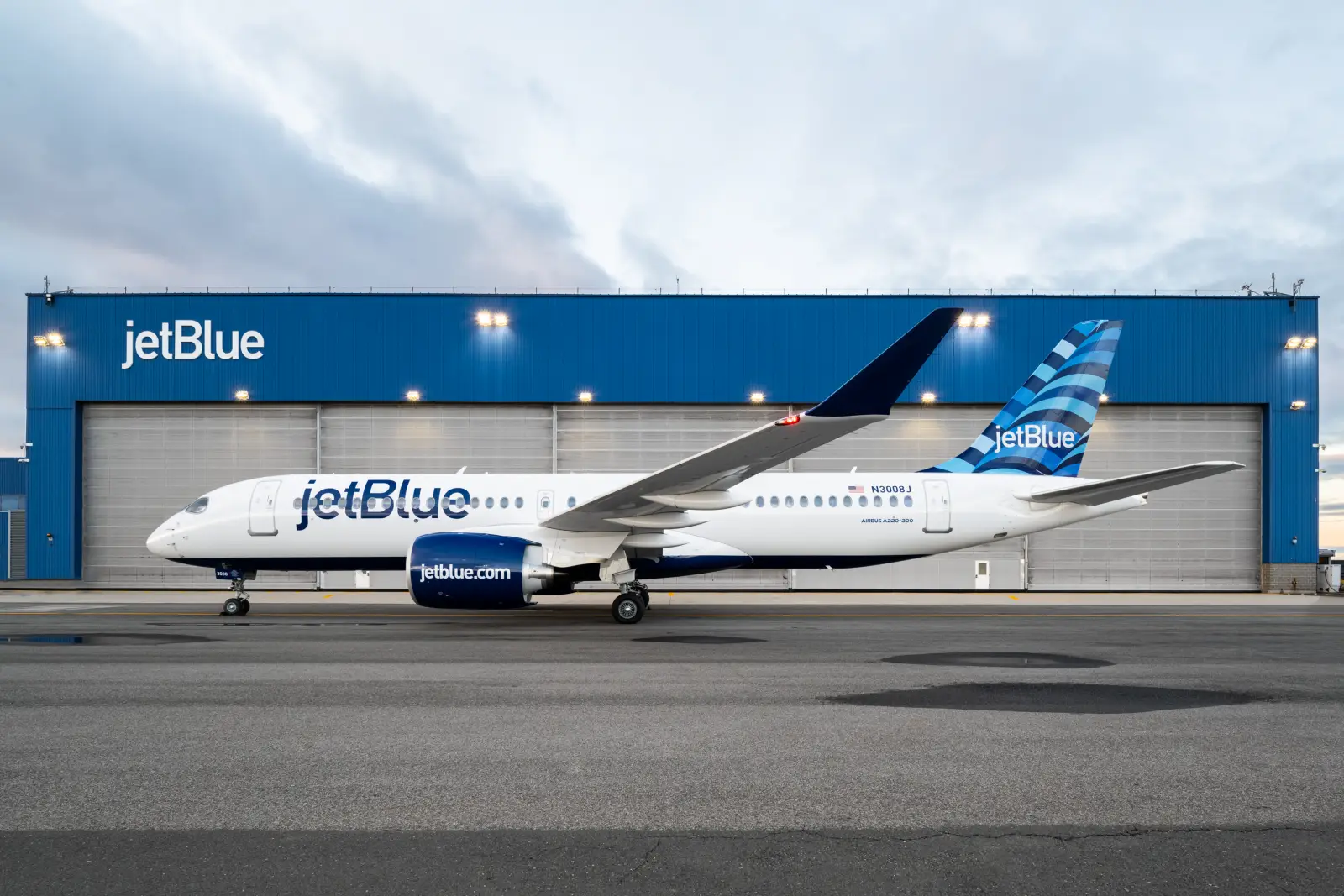
The flight marked the end of nearly two decades of service and coincided with the airline’s 50th delivery of the Airbus A220-300, further advancing its transition to an all-Airbus fleet. This milestone highlights JetBlue’s ongoing fleet modernization strategy, aimed at boosting operational efficiency and enhancing passenger experience.
The commemorative flight, numbered 190, recreated the airline’s inaugural E190 route from 2005. JetBlue’s Chief Operating Officer Warren Christie, who also piloted the first E190 flight, captained the final journey, joined by original crewmembers and invited guests. Gate-side celebrations were held in both cities to honor the aircraft’s legacy in shaping JetBlue’s regional network and customer service approach.
Fleet Evolution and Network Strategy
The E190 was JetBlue’s first 100-seat aircraft and played a central role in the airline’s expansion across short-haul and underserved markets, particularly in its New York and Boston focus cities. According to the airline, the aircraft introduced millions of travelers to JetBlue’s in-flight offerings and helped solidify its reputation for comfort and service. JetBlue was also the first airline in the world to fly the Embraer E190 commercially.
“I am proud to operate today’s flight, as it marks a significant evolution of our fleet,” said Warren Christie, Chief Operating Officer. “The E190 was instrumental in our early years and proved to deliver on critical connectivity in short-haul markets, allowing us to grow into new regions, especially in our New York and Boston focus cities.”
Modernization with the Airbus A220
The retirement of the E190 aligns with JetBlue’s long-term plan to simplify its fleet around Airbus aircraft. The delivery of the 50th Airbus A220-300 is a key benchmark in this strategy. JetBlue has now received 52 of the 100 A220 aircraft it has on order, which will operate alongside the Airbus A320 family. The A220 is tailored for both short- and medium-haul routes and is expected to unlock new transcontinental opportunities that the E190 could not serve.
The A220 features 140 Collins Meridian seats, the widest in JetBlue’s fleet. Cabins include large overhead bins, extra-large windows, and JetBlue’s signature amenities such as free Fly-Fi®, personalized in-flight entertainment, and in-seat power with AC, USB-A, and USB-C ports. Its design supports JetBlue’s dual goals of customer satisfaction and operational cost reduction.
With the shift to a two-aircraft-type model—Airbus A320s and A220s—JetBlue aims to streamline operations, reduce fuel consumption, and increase fleet flexibility. The retirement of the E190 is both a symbolic and strategic step as the airline celebrates its 25th anniversary and advances its JetForward growth initiative. The A220’s performance and range are expected to support continued expansion across both established and emerging markets.