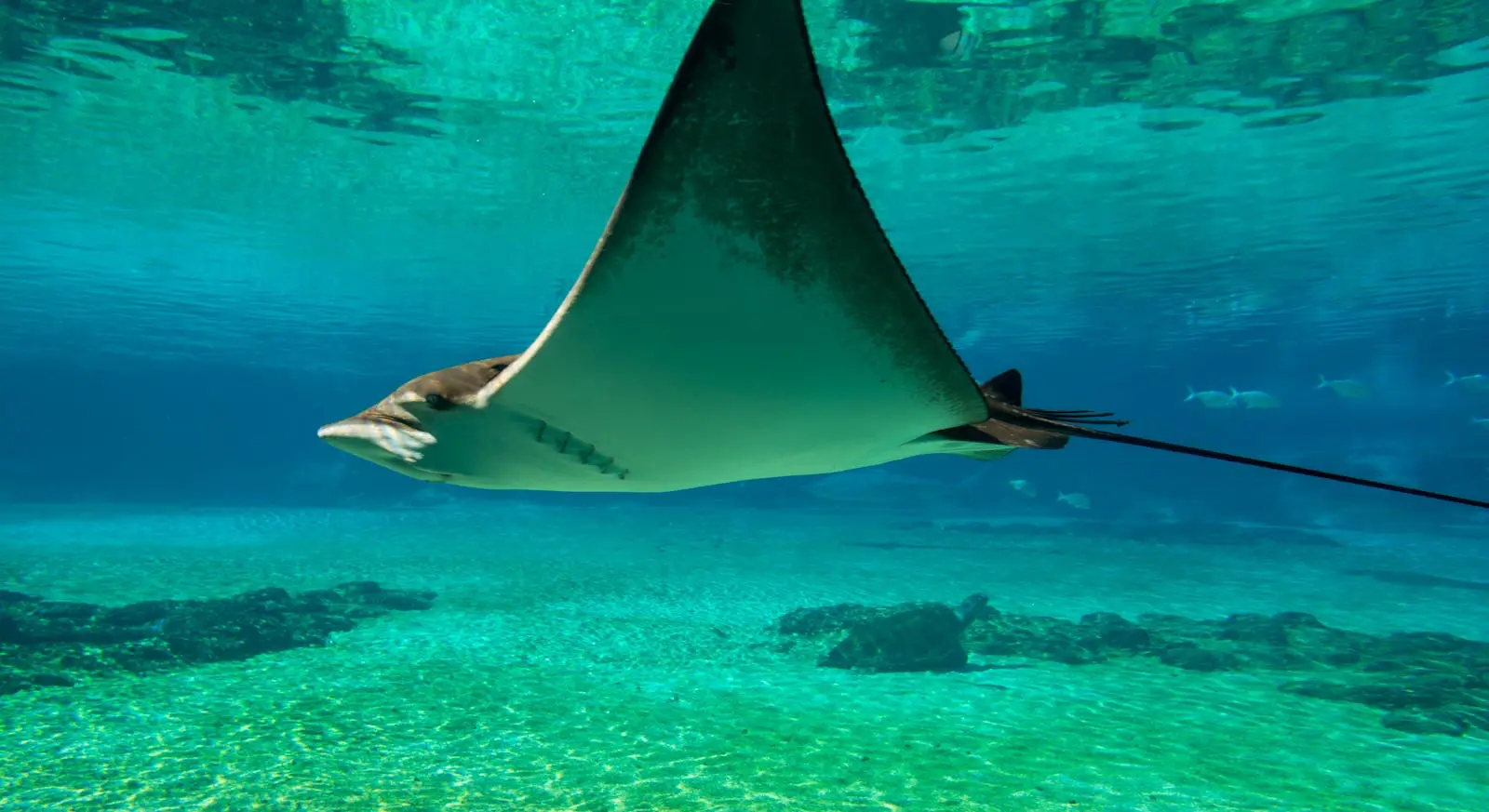
Manta rays spotted on Spanish beaches have sparked both fascination and concern among scientists, tourists, and local residents this spring. These graceful marine giants, usually found in the deep blue of the open ocean, have been making unusual appearances in the shallow coastal waters of the Valencian Community and parts of Andalusia, especially around Almería.
With their diamond-shaped bodies and long tails, manta rays are among the most captivating marine species. Their presence near the shore is not only rare but also potentially troubling. These animals, whose scientific name is Mobula mobular, are classified as endangered according to the IUCN Red List. Scientists are now working to understand what’s causing these animals to stray from their typical deep-sea habitat into areas frequented by swimmers and beachgoers.
Why Are Manta Rays Appearing on Beaches?
Manta rays are migratory creatures that spend their spring and summer months in the Mediterranean. Normally, they swim far from land, feeding on plankton in deeper waters. This spring, however, more than 20 sightings have been reported close to the Spanish shoreline, a significant increase compared to previous years.
Marine biologists currently identify two primary environmental stressors: rising sea temperatures and underwater noise pollution. As climate change warms Mediterranean waters and marine traffic continues to grow, manta rays may be experiencing disorientation, causing them to stray from their usual migratory routes.
Although there is no conclusive data yet, scientists are closely monitoring the situation. The lack of a clear pattern has prevented researchers from confirming a single cause. Ongoing studies aim to determine whether these sightings are isolated incidents or part of a larger shift in Mediterranean marine ecosystems.
Recent Manta Ray Sightings: Key Locations
| Region | Specific Area | Number of Sightings (Spring 2025) |
|---|---|---|
| Valencian Community | Denia, Gandia, Alicante | 12 |
| Andalusia | Almería coves, Cabo de Gata | 8 |
| Balearic Islands | Unconfirmed but under observation | Ongoing reports |
Locals and tourists have reported seeing these rays gliding close to the seabed in shallow water, sometimes just meters from the shore. Their size—some reaching wingspans of up to five meters—has caught many by surprise, often resulting in social media videos and increased interest in marine life among beachgoers.
Do Manta Rays Attack Humans?
Manta rays are often mistaken for dangerous marine animals, but the truth is they are completely harmless to humans. Despite their large size and resemblance to stingrays, manta rays are gentle, curious, and non-aggressive.
- No venomous stinger: Unlike stingrays, manta rays do not have a barb or stinger on their tails, making them physically incapable of stinging or injuring people.
- Filter feeders: Manta rays eat only plankton and small marine organisms by filter feeding. They are not predators and have no interest in humans as food.
- Non-aggressive behavior: Manta rays are shy by nature. While they may swim near divers or snorkelers out of curiosity, they do not show signs of aggression or territorial behavior.
- No recorded attacks: There are no documented cases of manta rays attacking or harming humans in the wild.
As with all wildlife encounters, the best practice is to admire these magnificent creatures from a respectful distance. Avoid touching or chasing them to ensure both your safety and the well-being of the manta ray.
Safety Guidelines for Beachgoers
As sightings become more frequent, Spanish authorities and marine conservation groups have issued a set of safety recommendations for anyone who may encounter a manta ray while swimming or walking along the shore. Though generally harmless, it’s important to treat these animals with caution and respect.
- Do not touch or approach the animal—manta rays are protected and can be injured by human contact.
- Keep a safe distance—stay at least 3 meters away from the ray to avoid causing stress to the animal or risking personal injury.
- Call 112 immediately—Spain’s emergency number will dispatch a marine response team to assess the situation.
- Do not attempt to push the animal back to sea—professionals are trained to handle these situations safely and effectively.
These steps help ensure the safety of both humans and manta rays, while also contributing valuable observational data for marine scientists.
Climate Change and Mediterranean Marine Life
The arrival of manta rays so close to Spain’s coast is part of a growing trend in the Mediterranean, where climate-related changes are affecting marine species’ behavior. Warmer waters have already altered the timing of plankton blooms, disrupted fish migration patterns, and even led to jellyfish overpopulation in some regions.
Manta rays, as filter feeders that depend on stable plankton ecosystems, are particularly vulnerable. If warming seas continue to disrupt plankton cycles, it could have cascading effects not only on the rays but also on the broader food chain that supports Mediterranean marine biodiversity.
Scientists from regional marine research centers are currently working to collect water temperature data, track ray movements, and examine behavioral shifts. The increased sightings serve as a reminder that the health of the sea is closely tied to visible changes on our beaches—and perhaps a call to action for both travelers and local communities to engage in ocean conservation efforts.
For now, manta rays remain a rare but awe-inspiring sight along Spanish coastlines. Whether they are signals of an ecosystem in flux or simply stunning visitors from the deep, their presence will continue to draw interest, spark questions, and demand careful observation in the months to come.