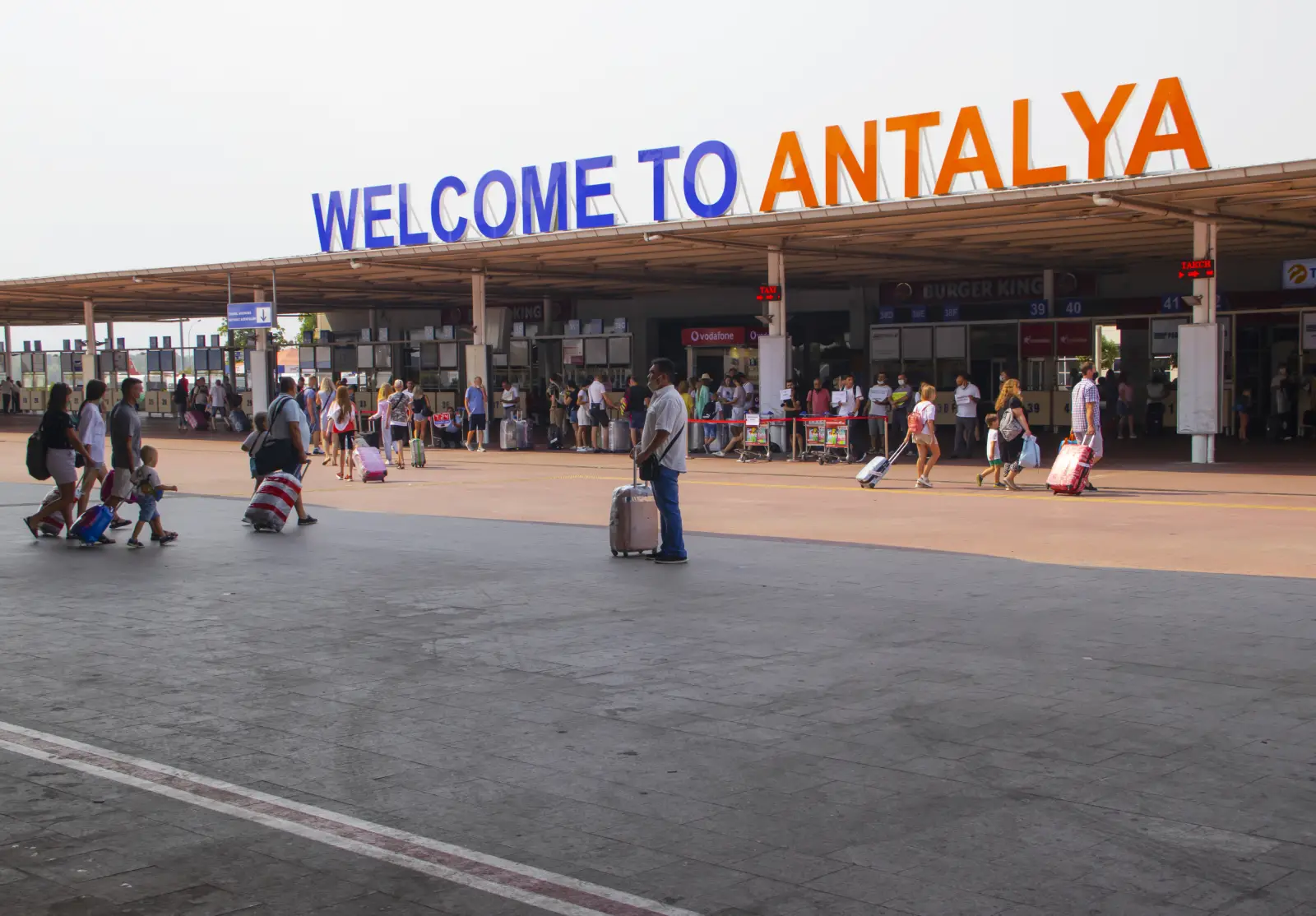
Antalya, one of Turkey’s leading tourism destinations, has recorded over 14 million visitors in the first nine months of 2025, maintaining strong momentum despite rising costs and regional instability.
However, industry leaders warn that tourist numbers are likely to plateau in the coming years as high prices and ongoing geopolitical tensions begin to weigh on demand.
According to data from the Ministry of Culture and Tourism, Antalya welcomed 2.39 million tourists in September alone, an increase of 49,114 compared to the same month last year. In total, the city hosted 14.09 million visitors between January and September, only slightly above last year’s figures.
Russia remained the top source market, followed by Germany, the United Kingdom, and Poland.
Tourism operators anticipate that Antalya will close the year with approximately 17 million visitors and $17 billion in revenue.
Strong 2025 Season Amid Price and Market Pressures
Despite sustained demand, the city’s tourism growth is projected to flatten over the next three years. Kaan Kaşif Kavaloğlu, President of the Mediterranean Touristic Hoteliers and Operators Association (AKTOB), said rising hotel prices in euros and the impact of ongoing wars have begun to limit international growth. “Unless the Russia-Ukraine war ends and the tensions created by Israel end, tourist numbers will remain stable at around 17–18 million for two or three years,” said Kavaloğlu.
Kavaloğlu explained that hotel rates in Antalya surged sharply following the pandemic. “We weren’t able to raise our prices at all in 2020–2021 due to the pandemic. Then there were double-digit increases between 2022 and 2024, and again in 2025 because things were looking good. However, European tourists can’t afford the nearly 50% price increase in euros since the pandemic,” he said, adding that hotels will be able to raise prices by no more than 5% in euros next year unless global conditions improve.
According to Kavaloğlu, the city’s tourism resilience comes mainly from domestic travelers and Turkish expatriates living in Europe, who helped maintain occupancy rates during slower months. “The domestic market and Turks living abroad came to our rescue. We owe the occupancy we experienced in July and August to them,” said Kavaloğlu. He added that while the sector had a strong summer, early 2025 marked one of the most difficult winters on record, with lower group bookings and austerity measures in effect.
Antalya Competes in a Slower Mediterranean Market
Antalya’s performance mirrors broader patterns seen across southern Europe’s tourism markets. Spain, another Mediterranean tourism leader, reported slower growth this summer, with its sector expanding by just 2.8%, the lowest rate since post-pandemic recovery. Like Turkey, Spain’s Mediterranean coast — home to popular destinations such as the Costa del Sol, Mallorca, and the Balearic Islands — is seeing visitor numbers stabilize after several years of record-breaking growth.
Tourism analysts note that both countries face similar challenges: inflation, regional conflicts, and a return to pre-pandemic travel patterns are tempering the rapid expansion seen between 2022 and 2024. However, Antalya’s sector continues to outperform expectations, bolstered by favorable weather conditions, extended travel seasons, and a strong mix of European source markets. Kavaloğlu said, “Because the climate conditions are favorable, we’re currently experiencing a surge of tourists, as if it were high season. Russians, Germans, British, and Poles are particularly prominent.”
The association head also highlighted that reservations continue to arrive from Germany, the Netherlands, Belgium, and the UK, suggesting that the high season could extend until late November. Antalya’s hospitality industry is working to promote year-round tourism through sports, cultural, and wellness offerings, aiming to reduce its dependence on the traditional summer season.
Sector Resilience and Outlook for 2026
Kavaloğlu emphasized that Antalya’s resilience amid global economic and political uncertainty demonstrates the strength of Türkiye’s tourism industry. “Geopolitically, we are significantly affected by the wars and crises around us, but tourism, along with all its stakeholders, is a very resilient sector. It weathers all crises and is a very important sector for the country,” he said.
He added that industry stakeholders are focusing on guest satisfaction and sustainability as key strategies for maintaining competitiveness against Mediterranean rivals such as Spain and Greece. “We are engaged in tourism in some of the most beautiful lands in the world. The strength and resilience of the tourism sector means the strength of the country as a whole,” Kavaloğlu said, noting that returning visitors play a crucial role in Antalya’s long-term stability.
Despite the forecast of flat growth through 2026, local operators remain optimistic about the region’s potential. The Ministry of Culture and Tourism and private sector partners are continuing joint efforts to extend Antalya’s appeal beyond summer and diversify its tourism offerings. With steady visitor inflows, a favorable climate, and sustained European demand, Antalya remains one of the Mediterranean’s strongest tourism markets — even as the region as a whole moves into a slower but more sustainable growth phase.