One of the most powerful earthquakes in modern history shook the Pacific region early Wednesday, sending rippling waves across thousands of miles of coastline.
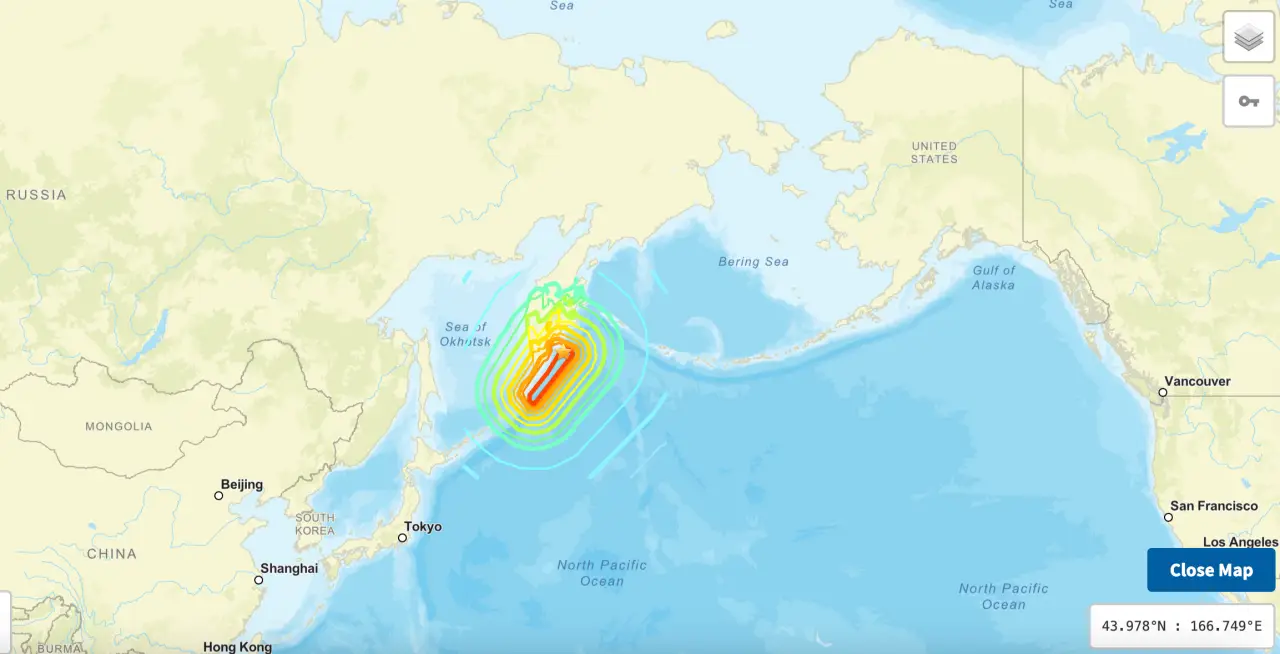
The 8.8-magnitude quake struck near Russia’s Kamchatka Peninsula, sparking widespread tsunami warnings that reached Japan, Hawaii, Alaska, and parts of the U.S. West Coast. The tremor caused harbors to flood, ferry services to halt, and communities to rush to higher ground.
Authorities across the Pacific urged residents and travelers to stay away from shorelines as surges and strong currents spread across the ocean. Even in places where waves were only a few feet high, experts emphasized the prolonged danger of the event, warning that multiple waves could arrive hours apart. The impact disrupted daily life from Russian fishing towns to Hawaiian beaches, creating a ripple effect across the travel and tourism sector.
Immediate Impact Across the Pacific
The earthquake’s epicenter was located about 119 kilometers (74 miles) east-southeast of Petropavlovsk-Kamchatsky, a key Russian port city with a population of roughly 180,000. The quake struck at a depth of 20.7 kilometers (13 miles), according to the U.S. Geological Survey. Russian authorities confirmed that several people were injured, though no fatalities were immediately reported.
Ports in Kamchatka were among the first to feel the tsunami’s force. Local mayor Alexander Ovsyannikov reported that fishing boats were washed out to sea as the port of Severokurilsk briefly flooded. Residents fled to higher ground while power checks were conducted across the region. The waves were initially measured at 3 to 4 meters (10 to 13 feet) along the Kamchatka coastline.
Travel Disruptions in Japan and Hawaii
Japan responded quickly to the tsunami threat, with the Japan Meteorological Agency reporting wave heights up to 60 centimeters (2 feet) in northern Hokkaido. In some towns, ferries and regional flights were suspended, and trains in coastal areas faced delays. Residents in Matsushima and other northern towns evacuated to local shelters, many recalling the devastating 2011 tsunami.
In Hawaii, where tsunami waves were expected hours after the quake, roads to coastal areas were closed and evacuation centers were activated. Hawaii Governor Josh Green urged people to stay off beaches and avoid flood-prone zones. He confirmed that Black Hawk helicopters and high-water vehicles were ready for potential rescues if the waves intensified.
The tsunami warning for the state of Hawaii has been downgraded to an advisory, as of 10:39 p.m. HST, according to the National Weather Service.
Tsunami Effects by Location
| Location | Wave Height | Reported Impact |
|---|---|---|
| Kamchatka, Russia | 3–4 meters (10–13 feet) | Port flooding, fishing boats washed out |
| Hokkaido, Japan | 60 cm (2 feet) | Ferry and train delays, minor port flooding |
| Aleutian Islands, Alaska | 30 cm (1 foot) | Strong currents, coastal warnings |
| Hawaii | 1.8 meters (6 feet, peak to trough) | Evacuations, road closures, strong currents |
| Oregon Coast, USA | 30–60 cm (1–2 feet) | Beach closures, marina warnings |
Why Tsunamis Remain a Persistent Risk
Tsunamis are a series of waves generated by sudden underwater shifts such as earthquakes, volcanic eruptions, or landslides. Unlike typical ocean waves, which are caused by wind, tsunamis can cross oceans at jet-like speeds and carry immense energy. Even smaller waves pose threats to swimmers, boats, and coastal infrastructure.
According to Dave Snider, tsunami warning coordinator for the U.S. National Tsunami Warning Center, “A tsunami is not just one wave. It’s a series of powerful waves over a long period of time.” He emphasized that the danger can last for more than 24 hours as water continues to move back and forth across the Pacific basin.
- Waves slow down as they approach shallow coastal areas, causing water to pile up and surge inland.
- Tsunamis may arrive in sets, with the largest wave sometimes not appearing first.
- Even small surges can capsize boats or sweep people into the ocean.
Implications for Global Travel and Tourism
The earthquake and tsunami prompted widespread disruptions to travel across the Pacific Rim. Cruise ships were diverted, flights were delayed in Japan, and ports temporarily shut down in Russia and Alaska. Coastal tourism hotspots advised visitors to stay indoors and avoid ocean activities.
Travel experts noted that such events highlight the importance of disaster preparedness in popular seaside destinations. Hotels and resorts in Hawaii and Japan followed pre-established evacuation plans, moving guests to higher floors or designated shelters. For travelers, real-time updates from local authorities and airlines remain critical during natural disasters.
Historical Context and Safety Lessons
The 8.8-magnitude quake is one of the strongest recorded since the catastrophic 9.0-magnitude earthquake in 2011 off Japan’s northeast coast. That disaster generated a deadly tsunami and triggered the Fukushima Daiichi nuclear meltdown. While the current event caused less immediate damage, its reach across the Pacific underscores the vulnerability of global coastlines.
Authorities across the Pacific advised travelers and residents to:
- Stay away from beaches, marinas, and harbors until advisories are lifted.
- Follow local evacuation orders and move to higher ground when instructed.
- Check travel advisories before boarding ferries, cruises, or flights in affected regions.
- Monitor official channels such as the Pacific Tsunami Warning Center for updates.
As the waves subside, coastal communities are left to assess minor flooding, inspect infrastructure, and ensure that future events are met with the same level of vigilance. This latest quake serves as a stark reminder that the Pacific’s scenic shorelines, beloved by travelers worldwide, remain on the frontlines of nature’s most powerful forces.