Ferrari has outlined a new long-term strategy that will reshape its product portfolio and investment priorities through 2030, targeting an average of four new models per year while scaling back its earlier electric-vehicle ambitions.
The announcement, made during the company’s Capital Markets Day in Maranello on October 9, sets a revenue goal of €9 billion by the end of the decade.
The updated roadmap refocuses Ferrari’s product mix toward a balanced lineup of internal combustion, hybrid, and electric vehicles, underscoring the company’s cautious approach to electrification. Executives said the brand’s future will continue to emphasize luxury, exclusivity, and the driving experience that defines its legacy, even as it adapts to shifting regulatory and market dynamics.
New Product and Electrification Targets
Ferrari confirmed it will launch an average of four new models each year between 2026 and 2030, continuing a steady rhythm of innovation while maintaining production discipline. The company described this strategy as essential to “broadening client engagement” without diluting its high-end brand positioning. Each model will be designed with a distinct identity and targeted at specific customer segments, according to official documentation released with the plan.
At the same event, Ferrari reduced its earlier electrification forecast. By 2030, the automaker now expects its lineup to comprise approximately 40% internal combustion engine vehicles, 40% hybrids, and 20% fully electric cars. This represents a major shift from previous guidance that anticipated a majority-electric range by the end of the decade.
The company attributed the adjustment to market conditions and customer preferences in the ultra-luxury segment. Demand for high-performance electric vehicles has been slower than expected, particularly among traditional buyers who continue to value the sound and feel of combustion engines. “Our approach remains guided by client expectations and technological excellence,” said Ferrari management in its presentation materials.
Ferrari Elettrica and Testing Expansion
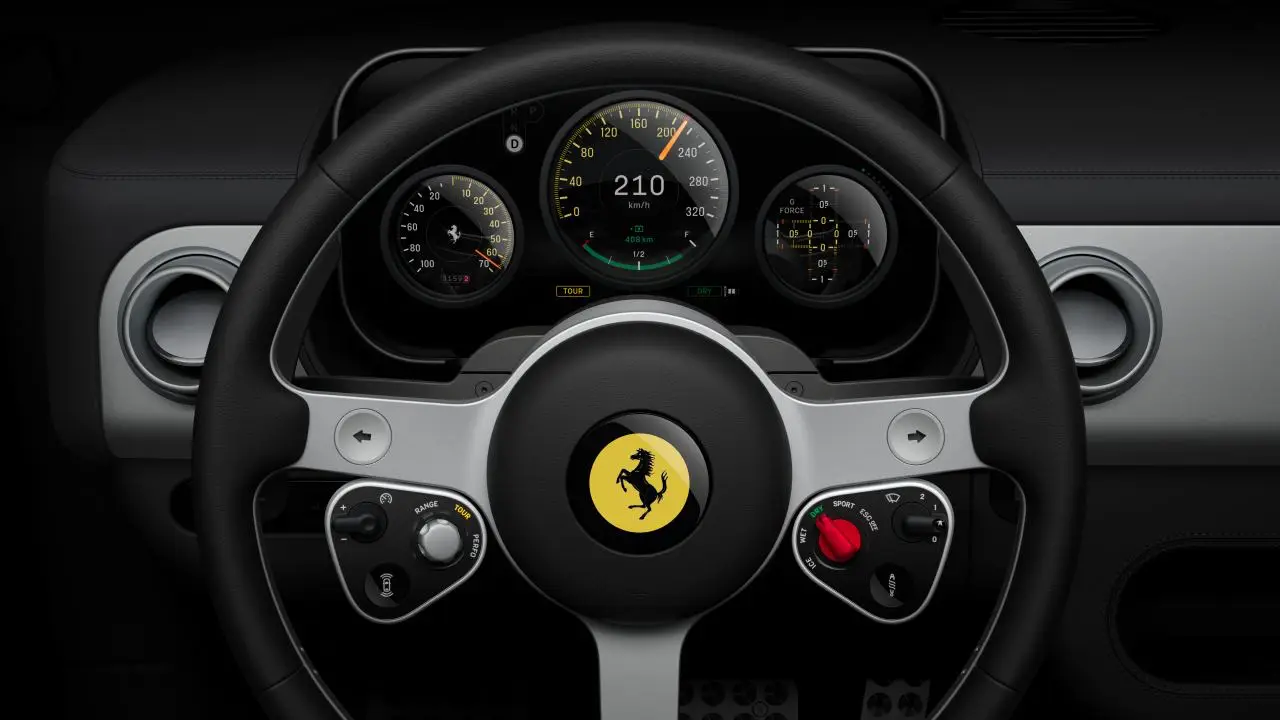
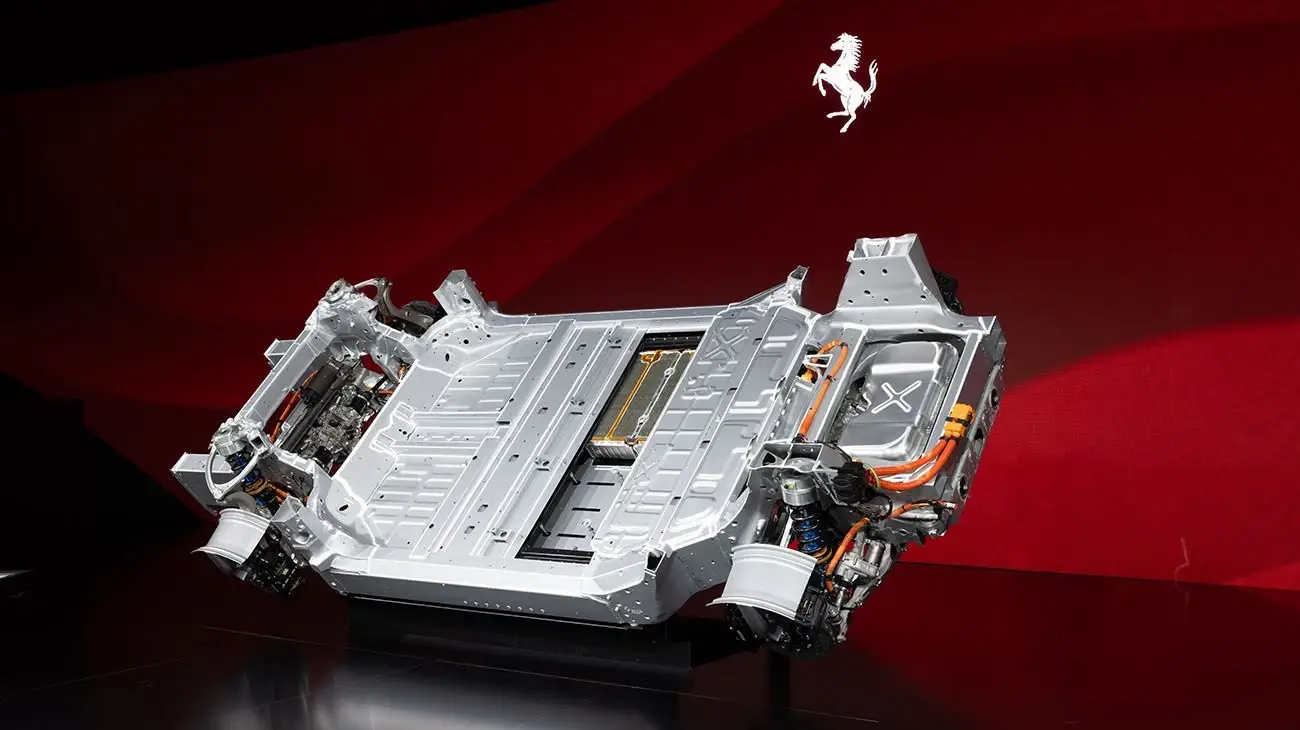
The first all-electric Ferrari, the Elettrica, was unveiled as part of the 2030 strategy rollout. The automaker showcased the car’s chassis and powertrain architecture but withheld full body details pending its production debut. Ferrari described the Elettrica as a key milestone in its evolution, though it does not plan to launch a second fully electric model before 2028.
To support development, Ferrari opened a new 1.17-mile testing facility in Maranello designed for advanced powertrain and vehicle dynamics testing, including electric systems. The track, referred to internally as the “e-Vortex,” will enable the company to refine performance characteristics across future model lines. The addition marks a strategic investment in research capacity as Ferrari balances tradition with innovation.
The company also reiterated its commitment to reducing the environmental impact of production at its Italian facilities. This includes expanded renewable energy use, improved material sourcing, and efficiency upgrades across manufacturing operations.
Financial Outlook and Market Reaction
Alongside the product roadmap, Ferrari raised its annual guidance for 2025 and set a target of €9 billion in total revenue by 2030. Management cited higher average selling prices, expanded personalization programs, and a stronger contribution from lifestyle segments as key growth drivers. The plan builds on consistent profitability that has characterized Ferrari’s post-IPO era and reinforces its positioning as one of the most resilient brands in the global luxury sector.
However, the market reaction to the announcement was sharply negative. Shares of Ferrari experienced their steepest one-day decline on record following the presentation. Analysts cited investor disappointment with the reduced electrification targets and more conservative profit expectations. The Financial Times reported that the company’s halved EV ambitions and slower rollout schedule raised doubts about its ability to compete in an increasingly regulated European market.
Despite the market volatility, Ferrari emphasized that its long-term priorities remain focused on exclusivity and sustainable value creation. “Our strategy ensures profitability without compromising the essence of Ferrari,” said company executives during the presentation. The automaker reaffirmed that it will continue to cap annual production to preserve brand scarcity, an approach that has underpinned its strong pricing power in recent years.
Luxury Travel and Brand Experience
Ferrari’s recalibrated strategy extends beyond automotive engineering to encompass a broader luxury travel and lifestyle ecosystem. The brand continues to expand its “Tailor Made” program, offering clients bespoke customization options across vehicles and related experiences. These include private track events, curated road tours, and immersive brand encounters designed for the global elite.
Industry analysts view this expansion as part of a larger trend among ultra-luxury manufacturers seeking to deepen engagement through travel and experiential offerings. Ferrari’s network of exclusive driving events and bespoke experiences aligns with the preferences of high-net-worth customers who increasingly value craftsmanship and emotional connection over pure technology adoption.
By pacing its entry into the electric era while expanding its product and experience portfolio, Ferrari is positioning itself to retain leadership in the luxury performance segment. The company’s disciplined approach signals confidence in its core clientele, many of whom view the marque as an emblem of heritage and status as much as innovation.
As the global automotive industry accelerates toward electrification, Ferrari’s cautious strategy marks a distinctive path — one that blends technological evolution with an unyielding commitment to the brand’s legacy of exclusivity and emotion. For the luxury travel market, it reaffirms Ferrari’s role not just as a carmaker but as a curator of lifestyle experiences that define modern prestige mobility.
Top Photo Credit: William’s photo / Shutterstock.com