Google Maps Treks showcases some of the world’s most dramatic landscapes and cultural landmarks through immersive, interactive online tours that go far beyond traditional Street View.
The collection allows users to explore remote or protected locations using high-resolution 360-degree panoramas, photos, videos and layered background stories, opening access to places that are difficult, sensitive or costly to reach in person.
The platform features world-famous natural wonders and heritage sites including the Grand Canyon in the US, Mount Everest and its access routes, the Amazon rainforest, the Galápagos Islands and historic complexes such as Angkor Wat. Users navigate marked routes using interactive arrows, open information panels that explain natural and cultural context, and move seamlessly through landscapes in a standard web browser. The tours support travel planning, education and barrier-free access while offering perspectives that are often impossible even for on-site visitors.
How Google Maps Treks works
At its core, Google Maps Treks builds on the familiar logic of Street View, but transforms it into guided journeys that feel closer to short documentaries than static map browsing. Each trek follows a clearly marked route, allowing viewers to move step by step through a landscape, pause at key viewpoints and rotate their perspective in all directions.
Navigation remains intuitive. Users select a trek directly on the website and follow interactive arrows embedded in the imagery. Information boxes appear at specific points to explain geological formations, wildlife habitats, archaeological discoveries or cultural traditions. Supplementary photos, short videos and embedded maps add further context, helping viewers understand where they are within the wider region and why a particular site matters.
What makes Treks especially compelling for travel enthusiasts is how the imagery is captured. In places where cars cannot go — narrow mountain paths, fragile ecosystems, dense rainforest or steep stairways inside heritage sites — Google uses wearable camera rigs known as Trekker backpack systems. These multi-lens rigs are carried by operators on foot, producing continuous panoramic imagery along trails and walkways that would otherwise remain unmapped.
In more complex environments, the capture process becomes even more inventive. Boats fitted with camera trikes allow mapping along rivers and wetlands, while drones and helicopter flights add aerial viewpoints that reveal scale, terrain and access routes. Underwater cameras expand coverage into marine environments, helping document coastal ecosystems and reef structures. Together, these techniques create a layered view of destinations that blends ground-level intimacy with sweeping perspective.
The imagery streams smoothly in high resolution through standard browsers, requiring no specialist hardware. By combining Street View technology with interactive mapping and narrative elements, Treks creates a sense of guided exploration rather than passive viewing. For users accustomed to scrolling through static photographs, the ability to “walk” through environments adds a stronger sense of place and spatial understanding.
Another lesser-known aspect of the project is how new destinations are added. Through a Trekker Loan Program, tourism boards, conservation groups, universities and non-profit organisations can borrow Trekker equipment to map unique environments. This decentralised approach expands coverage beyond what a single company could capture alone and allows local experts to highlight culturally or environmentally significant areas. It also means the Treks catalogue continues to grow and diversify over time.
For travellers interested in sustainability, this collaborative model has practical implications. Mapping fragile sites digitally can reduce physical pressure on sensitive ecosystems while still supporting education and awareness. It also allows communities to showcase their landscapes and heritage on their own terms, encouraging more informed and responsible tourism planning.

Where you can go — and what makes these Treks special
The destinations available through Google Maps Treks span deserts, rainforests, high-altitude mountains, coastlines and archaeological complexes. In the American Southwest, the Grand Canyon trek reveals layered rock formations, expansive viewpoints and deep geological time, all visible through sweeping panoramas that convey scale far more effectively than single images.
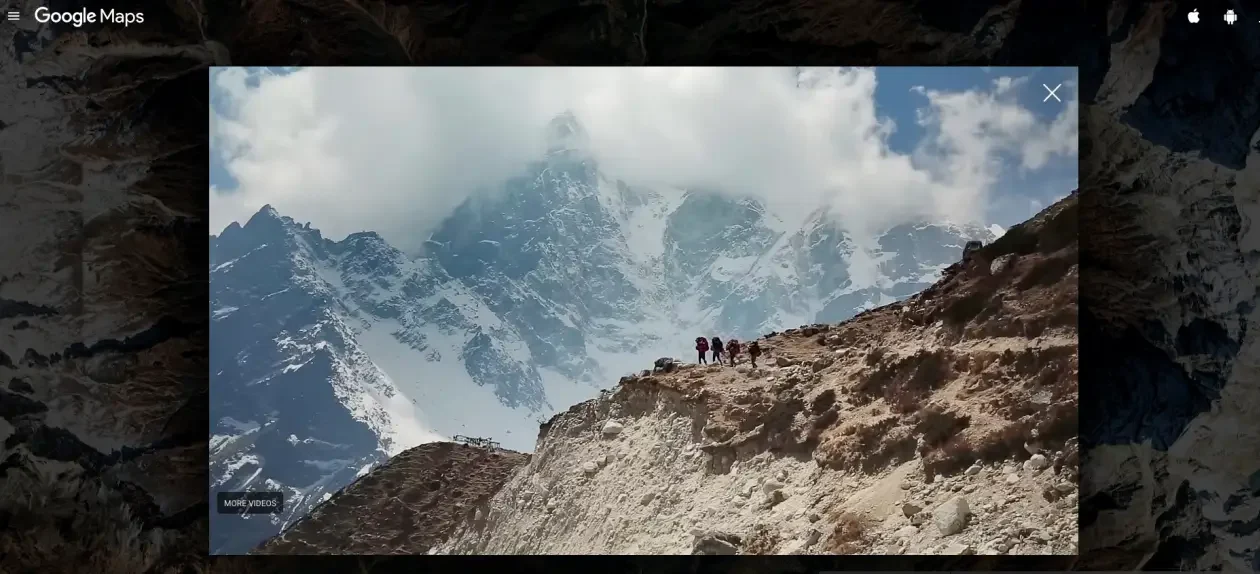
For adventure-focused viewers, Mount Everest’s access routes offer insight into the logistics and terrain faced by climbers. Users can explore base camps, rocky approaches and icy sections while learning about elevation, weather exposure and route planning. It provides a rare close-up look at one of the world’s most demanding environments without the risks, permits or physical strain normally required.
In the Amazon rainforest, Treks highlights dense vegetation, river systems and biodiversity. River-based imagery captures how communities and wildlife interact with waterways, while forest trails reveal canopy layers and ecological complexity. These visual narratives help users understand why the region is environmentally significant and why access must often be limited to protect delicate habitats.
The Galápagos Islands bring volcanic landscapes and unique ecosystems into view, allowing users to move between rugged coastlines and inland terrain while observing how isolation has shaped wildlife habitats. The sense of spatial continuity — rather than isolated snapshots — reinforces how geography influences biodiversity.
Cultural heritage is equally prominent. Angkor Wat and similar archaeological sites allow viewers to examine temple layouts, architectural detail and spatial relationships between structures. Interior and elevated perspectives provide angles that visitors may miss when navigating crowded walkways or restricted zones. The ability to linger digitally encourages slower observation and deeper appreciation of design and craftsmanship.
Beyond these headline destinations, Treks also includes a growing mix of lesser-known locations: dramatic climbing routes, protected national parks, historic monuments and remote landscapes that rarely appear in mainstream travel coverage. This breadth appeals to travellers seeking inspiration beyond conventional itineraries and helps surface destinations that may otherwise remain overlooked.
For trip planning, the platform offers practical benefits. Viewing terrain, trail gradients, access points and surrounding infrastructure can inform decisions about fitness levels, equipment needs and time management. For photographers and filmmakers, the imagery provides insight into lighting, viewpoints and spatial composition. Educators use Treks to bring geography, environmental science and history into classrooms with reliable visual material.
Accessibility remains one of the strongest advantages. People with mobility limitations, limited budgets or time constraints can explore places that would otherwise be inaccessible. Families can introduce children to distant landscapes without long flights or complex logistics. For older travellers, Treks offers a low-impact way to revisit places they once explored or dream about future journeys.
There are also unexpected emotional benefits. Virtual exploration can spark curiosity and motivation, encouraging users to learn more about unfamiliar regions or cultures. For those recovering from illness or managing long-term mobility challenges, the ability to move freely through landscapes — even digitally — can provide a meaningful sense of connection to the wider world.
At the same time, Treks does not aim to replace physical travel. Instead, it complements it by reducing uncertainty and improving preparation. Seeing terrain in advance can lead to safer planning, more realistic expectations and better appreciation when travellers eventually arrive on site. In sensitive environments, digital exploration may also reduce overcrowding and environmental strain.
The technical storytelling continues to evolve as capture methods improve and partnerships expand. As more organisations contribute imagery through loan programmes and collaborative projects, the catalogue becomes more diverse in geography, culture and environmental focus. This ongoing expansion reinforces Treks as a living archive rather than a static product.
For global travel audiences, Google Maps Treks sits at the intersection of inspiration, education and accessibility. It offers a way to explore deserts, rainforests, mountains and heritage sites from anywhere in the world, turning curiosity into informed engagement. Whether used for dreaming, planning or learning, the platform demonstrates how digital tools can broaden access to the planet’s most extraordinary places while encouraging more thoughtful travel in the future.