Global companies are strengthening their commitments to sustainable business travel, but a new industry benchmark finds progress remains inconsistent across key areas.
The Global Business Travel Association (GBTA) Foundation’s 2025 Sustainability Acceleration Challenge reveals that while more organizations are tracking and managing travel emissions, adoption of low-carbon solutions continues to lag.
The annual benchmark, developed with Accenture, gathered input from 285 corporations representing a combined business travel spend of $22 billion. The results, released during the GBTA + VDR Europe Conference in Hamburg, show a 20% increase in participation compared with 2024, signaling rising engagement. Yet the overall maturity score across companies improved only marginally—from 1.3 to 1.4 on a five-point scale—indicating slow progress in embedding sustainability within global travel programs.
Modest gains amid rising participation
The GBTA Foundation reported that smaller companies with travel budgets under $5 million have made notable strides in advancing sustainability initiatives, while larger programs exceeding $500 million in annual spend have regressed. The Financial, Banking and Insurance sector leads with a maturity score of 1.9, followed by Professional Services and Consulting at 1.7. These industries account for a significant portion of emissions tied to business travel.
Areas showing the most improvement include Sustainable Travel Policies, which rose from a 1.8 to 2.2 score, and Carbon Budgets, up from 0.5 to 0.7. Reporting and target-setting have also become more standard practice, with more firms integrating these mechanisms into their travel programs. However, tools that directly shape travel decisions—such as carbon fees or online booking tool (OBT) features designed to encourage greener choices—have shown little to no progress.
“Year two of our benchmark shows real engagement and growing commitment. But despite progress, greater urgency is needed,” said Delphine Millot, Senior Vice President, Advocacy and Sustainability, GBTA, and Managing Director, GBTA Foundation. “To future-proof business travel, companies must accelerate adoption of sustainable procurement practices and carbon management strategies to send a real signal to the market.”
Where companies are falling short
Despite growing awareness, the benchmark highlights three critical areas that require acceleration: influencing travel behavior, unifying demand for sustainable suppliers, and investing in emissions abatement technologies. Supplier sustainability assessments have increased, but more advanced measures—such as adopting GBTA Sustainable Procurement Standards or embedding sustainability clauses in contracts—remain static at a score of 1.2. Limited guidance and technology gaps continue to slow progress.
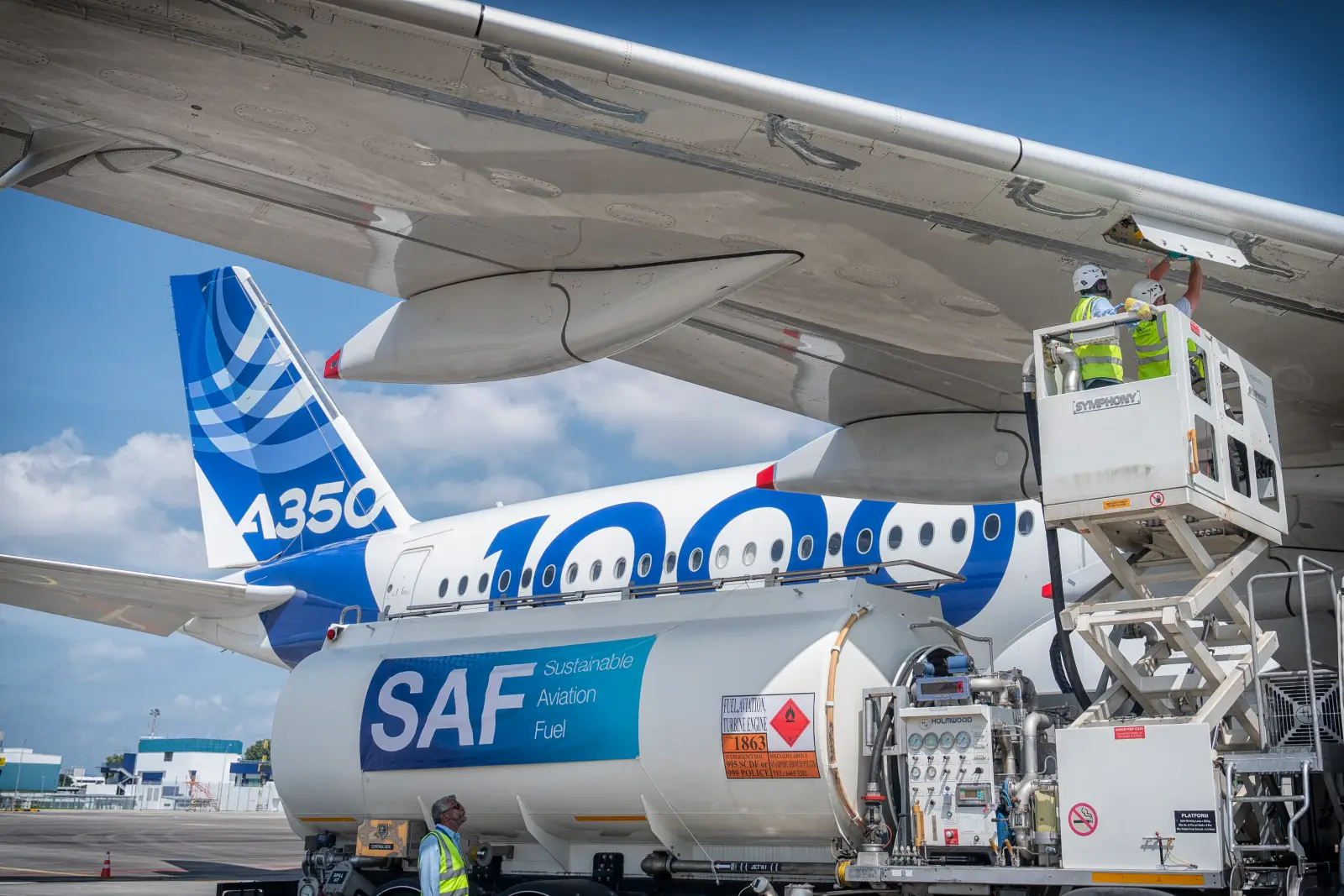
Investment in Sustainable Aviation Fuels (SAF) has grown modestly, with 15% of corporations purchasing SAF certificates in 2025, up from 12% last year. While this trend points to increased interest, adoption remains far from mainstream. GBTA encourages firms to use its SAF Corporate Connect program to support implementation and share best practices across the sector.
“The GBTA Sustainability Acceleration Challenge provides a roadmap for the future,” said Dr. Jesko-Philipp Neuenburg, Global Travel & Aviation Sustainability Lead, Accenture. “With more companies participating, we’re seeing where the industry is moving forward, and where further collaboration can close the gap between ambition and action.”
According to GBTA, regional performance varied. Global and Asia-Pacific travel programs recorded slight improvements, while European and North American firms saw marginal declines, reflecting the influence of regulatory and economic uncertainty on travel policy advancement.
Recognizing leaders and innovators
To highlight progress, GBTA introduced the inaugural Acceleration Awards and Leaderboards recognizing companies that demonstrate leadership and measurable improvement in travel decarbonization. Winners include Kearney, BDO LLP, Parexel, University of California, IKEA, and Nokia across various global, regional, and industry categories. BDO LLP was named Europe’s Regional Leader for its sustainability-driven travel initiatives.
“BDO LLP are participating in the Acceleration Challenge to showcase our leadership in sustainable travel,” said Verity Phillips-Davies, Travel Manager at BDO LLP. “By innovating and advocating for impactful solutions, we aim to inspire industry-wide change and demonstrate how strategic engagement can significantly reduce the carbon footprint of business travel.”
Millot added: “These companies exemplify the leadership, innovation, and collaboration needed to transform business travel for a net-zero future. Their commitment to measurable progress shows what’s possible when sustainability becomes an integral part of corporate travel strategy.”
The GBTA Foundation continues to expand resources to help organizations transition from awareness to implementation through its Sustainable Business Travel Transition Pathway and new training on Sustainable Procurement Standards. The initiative also tracks best practices and SAF adoption to encourage measurable, industry-wide progress toward decarbonizing business travel.