Sustainable architecture emerged as one of the strongest themes among hospitality winners at the 2026 Architizer A+Awards, as hotels and resorts focused increasingly on low-impact construction, local materials and climate-responsive design.
The annual awards programme reviewed more than 4,000 entries from around the world and recognised projects across architecture, interiors and urban design. Several of the winning hospitality projects highlighted environmental performance, biophilic design and stronger connections between hotels and local landscapes, reflecting wider changes in luxury travel and destination development.
The latest winners suggest that sustainability has become a central factor in hotel architecture rather than a niche category. Many projects combined energy-conscious construction with wellness-oriented spaces, natural ventilation and regional cultural influences.
Sustainable hotels and local identity lead hospitality trends
Among the most prominent hospitality winners was Cloudhaus Hotel in Chongqing, China, designed by RooMoo Design Studio. The project received the Jury Winner award in the Sustainable Interior Project category during the 14th Annual A+Awards.
According to Architizer’s official winners announcement, the hotel stood out for its low-impact interiors, extensive use of natural light and minimalist material palette. The design reflects a broader hospitality trend toward wellness-focused interiors and reduced visual excess.
Populus, designed by Studio Gang in the United States, also attracted attention for its environmentally focused approach to urban hospitality. The project was featured among the leading hotel and resort winners on the Architizer winners platform.
The hotel incorporates biophilic architecture and carbon-conscious construction principles, with exterior forms inspired by natural tree patterns. The project reflects how city hotels are increasingly being positioned as part of wider urban sustainability strategies.
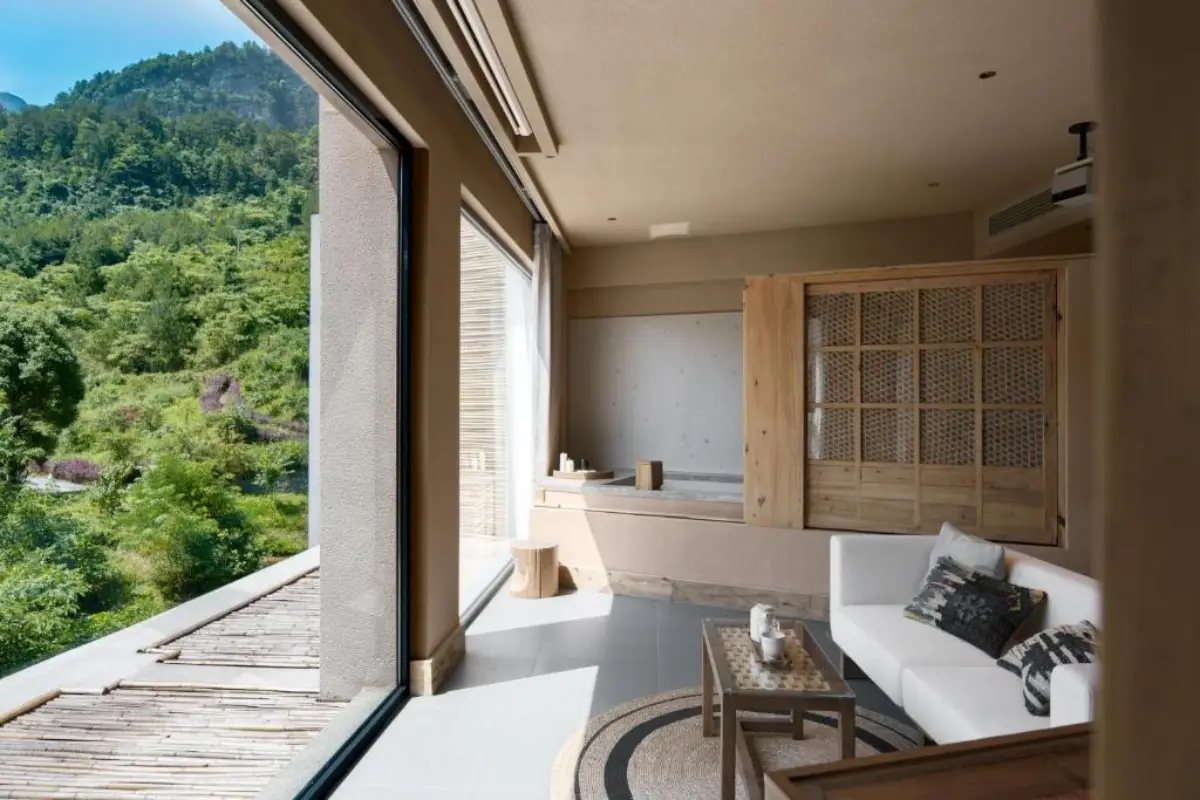
Other recognised projects focused on integrating hospitality developments into surrounding landscapes. Dongmingshan Senyu Hotel, designed by GLA Architects, emphasised immersion in nature and close integration with the local environment.
The project aligns with growing demand for slower travel experiences and nature-based tourism, particularly in Asia-Pacific destinations where eco-resorts and wellness retreats continue expanding.
Poodom Deqin Meri Hotel, designed by BUZZ / Büro Ziyu Zhuang, was named a Jury Winner in hospitality-related categories. The project uses regional materials and mountain-sensitive architecture to blend contemporary hotel design with local identity and environmental considerations.
Architecture shifts toward wellness and climate adaptation
The hospitality winners also highlighted wider architectural trends shaping global tourism infrastructure. Several projects relied on passive cooling, natural ventilation, shading systems and locally sourced materials instead of energy-intensive design solutions.
According to the awards coverage, many projects prioritised open-air layouts, vegetation, daylight and calm interior environments designed to support guest wellbeing.
The awards also demonstrated how hotel developers are increasingly moving away from standardised luxury models. Instead, architects focused on regional craft traditions, local construction methods and site-specific experiences intended to differentiate destinations in a competitive hospitality market.
The broader shift reflects changing traveller expectations, particularly in luxury and experiential tourism, where sustainability and authenticity are becoming more important alongside comfort and design.
The 2026 Architizer A+Awards results suggest that future hospitality projects are likely to place greater emphasis on environmental performance, climate resilience and cultural integration as hotels compete to attract increasingly sustainability-conscious travellers.
The awards also recognised major transport infrastructure projects in Cambodia, Canada and Mexico. Winners included Techo International Airport in Phnom Penh, Maxcanu Station in Mexico’s Yucatan peninsula, Toronto’s Line 5 Eglinton and Montreal’s REM stations at Edouard-Montpetit and McGill. More details can be found in our previous article, Architizer A+Awards Reveal 2026’s Top Transport Hubs.