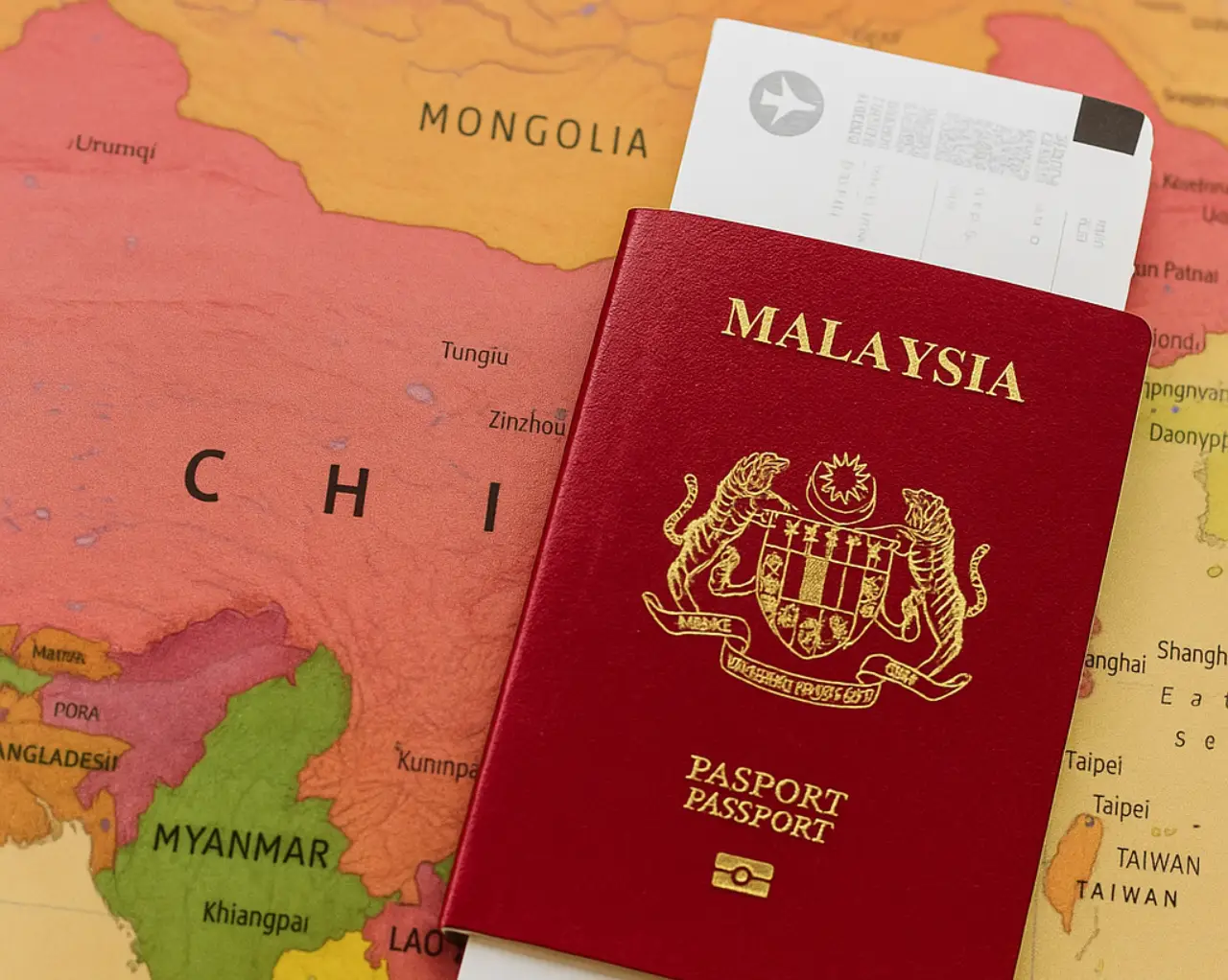
Malaysians can now travel to China without a visa for short-term visits, marking a significant development in bilateral relations and tourism opportunities.
The change came into effect on Thursday, July 17, under the China-Malaysia Agreement on Mutual Visa Exemption. This agreement allows passport holders from both countries to enter, exit, or transit through each other’s territories without a visa for stays of up to 30 days per visit.
The visa-free arrangement applies to various travel purposes, including tourism, business, cultural exchange, family visits, private affairs, medical treatment, and even as crew members. However, travelers should take note of a crucial stipulation: while each stay can be up to 30 days, the cumulative duration of all stays must not exceed 90 days within any 180-day period.
What the Mutual Visa Exemption Means for Travelers
This agreement was finalized during Chinese President Xi Jinping’s state visit to Kuala Lumpur in April. It marks a new phase in diplomatic cooperation and opens up expanded mobility for citizens of both countries. Malaysians, in particular, benefit from increased travel freedom across one of Asia’s largest and most culturally diverse nations.
Likewise, Chinese citizens traveling to Malaysia will enjoy similar freedoms, enabling easier access to Southeast Asia. The policy reflects China’s broader approach to regional integration and international tourism recovery following the pandemic era.
Eligible Travel Purposes
According to the statement issued by the Chinese Embassy in Malaysia, the visa-free policy includes:
- Tourism and sightseeing
- Family visits and reunions
- Business meetings and trade activities
- Cultural and academic exchanges
- Private affairs and personal travel
- Medical treatment
- Transit through China
- Travel as airline or shipping crew
This broad eligibility ensures that the agreement appeals to a wide spectrum of travelers. However, if a traveler intends to stay in China for more than 30 days during a single visit, or engage in activities like work, study, journalism, or other forms of regulated employment, they must obtain a relevant visa in advance.
Policy Parameters and Travel Advisory
Under the new arrangement, the 90-day limit applies to a rolling 180-day window. That means travelers must calculate their total time spent in China over any 180-day span to remain in compliance. Overstaying the permitted days could result in fines, travel bans, or other penalties under Chinese immigration law.
Those with long-term plans in China should also note that visa-free entry does not substitute for residency, employment authorization, or student permits. Travelers are encouraged to consult with Chinese consulates or official immigration authorities for additional requirements based on their purpose of stay.
China-Malaysia Relations Strengthen Through Mobility
This mutual visa exemption is more than just a travel convenience—it’s a diplomatic gesture that underscores the maturing partnership between China and Malaysia. With tourism, business, and people-to-people exchanges at the core of regional connectivity, this agreement is expected to result in measurable increases in travel between the two nations.
For Malaysia, this policy also aligns with its strategy to strengthen tourism, outbound investment, and global cultural outreach. For China, it’s part of a broader reopening to international visitors after several years of pandemic-related restrictions.
Key Details at a Glance
| Feature | Details |
|---|---|
| Visa-Free Entry Start Date | July 17, 2025 |
| Per Visit Duration | Up to 30 days |
| Total Stay Limit | 90 days within 180 days |
| Eligible Travel Purposes | Tourism, business, family, medical, cultural exchange, etc. |
| Visa Required For | Work, study, journalism, stays over 30 days |
As of Thursday, travelers will be able to enter China without the usual paperwork, making spontaneous trips or multi-visit plans more appealing. This could significantly benefit both leisure travelers and business professionals seeking to forge stronger regional ties.