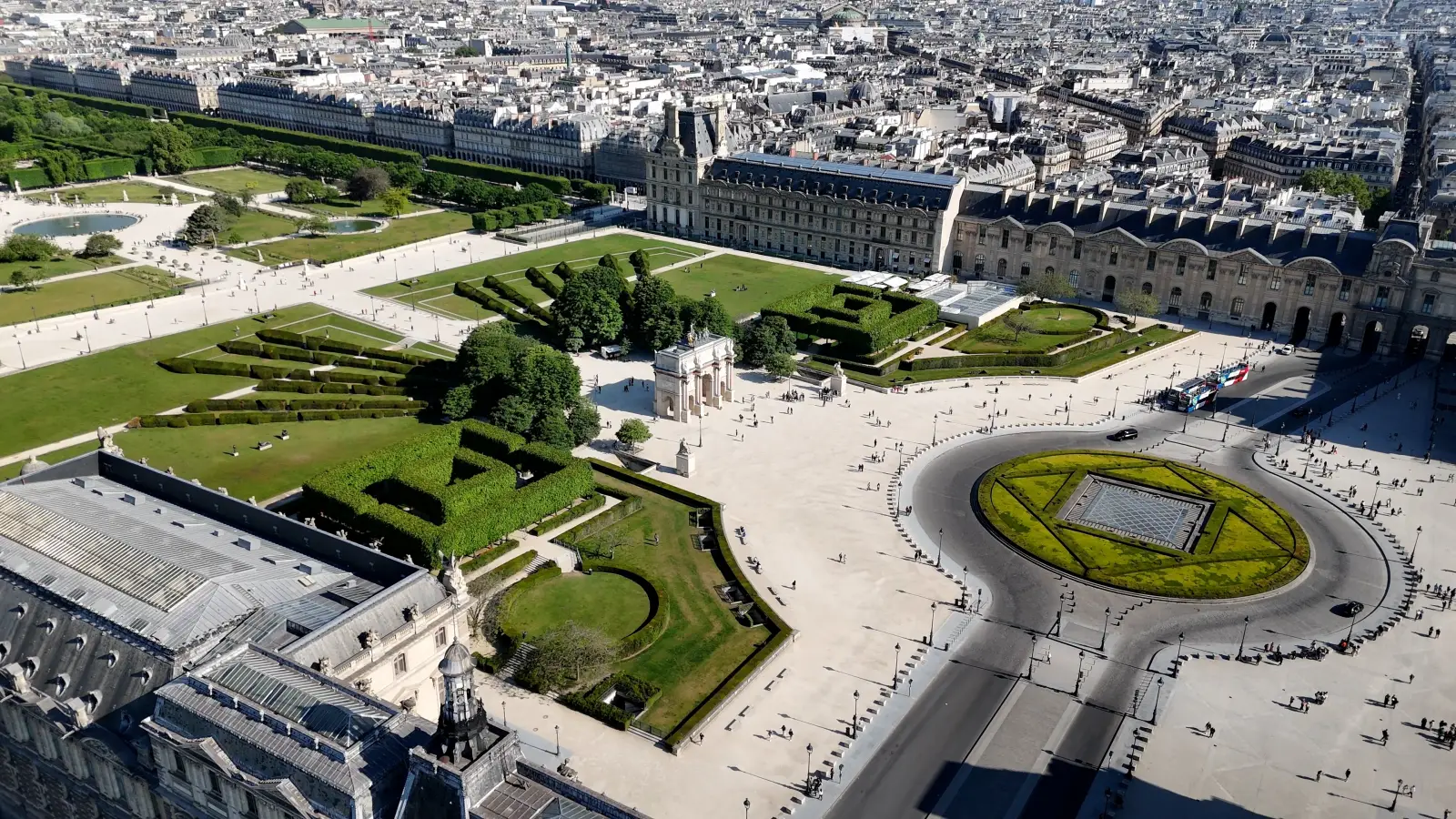
Paris authorities are facing scrutiny after reports revealed that the Louvre Museum’s internal surveillance system used the password “LOUVRE,” a discovery that has intensified criticism of long-ignored cybersecurity warnings preceding last month’s multimillion-euro heist. Investigations now point to systemic lapses that left the world’s most visited museum vulnerable to infiltration.
Post-heist reports published over the weekend by French and international outlets, including Unione Sarda and Red Hot Cyber, confirmed that the museum’s video-surveillance network operated under the simplistic password for years despite repeated alerts from France’s national cybersecurity agency, ANSSI. Officials said the system’s weaknesses were first identified in a 2014 audit but were never fully addressed. The revelation has prompted an emergency review of digital and physical security at the Paris landmark.
Simple password exposes deeper security crisis
The breach came to light during an internal investigation following the late-October theft of rare jewels from a temporary exhibition. According to sources cited in multiple reports, the attackers exploited outdated access protocols and network vulnerabilities, gaining control of several internal cameras before disabling them. The use of an easily guessed password—reportedly “LOUVRE” or a minor variation—has been described by security analysts as a textbook example of failed risk management.
French Culture Ministry officials acknowledged that the incident revealed “chronic underestimation of digital threats” within heritage institutions. “The password discovery underscores a lack of coordination between museum administrators and state cybersecurity frameworks,” said one internal report referenced in local media. No formal statement from the Louvre Museum’s press office has yet addressed the specific allegations about password usage.
Experts warn that while the theft targeted artifacts rather than tourists, the fallout affects public confidence in cultural sites worldwide. With the Louvre welcoming nearly 8 million visitors annually, its security protocols are central not only to art protection but also to maintaining international trust in France’s tourism sector. The museum remains open to the public, with additional guards and digital safeguards introduced over the weekend.
The controversy deepened after the disclosure that the ANSSI audit a decade ago had flagged both “weak password practices” and “obsolete video management servers” as potential vulnerabilities. Subsequent budgetary delays and administrative restructuring allegedly prevented full implementation of the agency’s recommendations. According to Unione Sarda, the system was “patched sporadically” but never modernized.
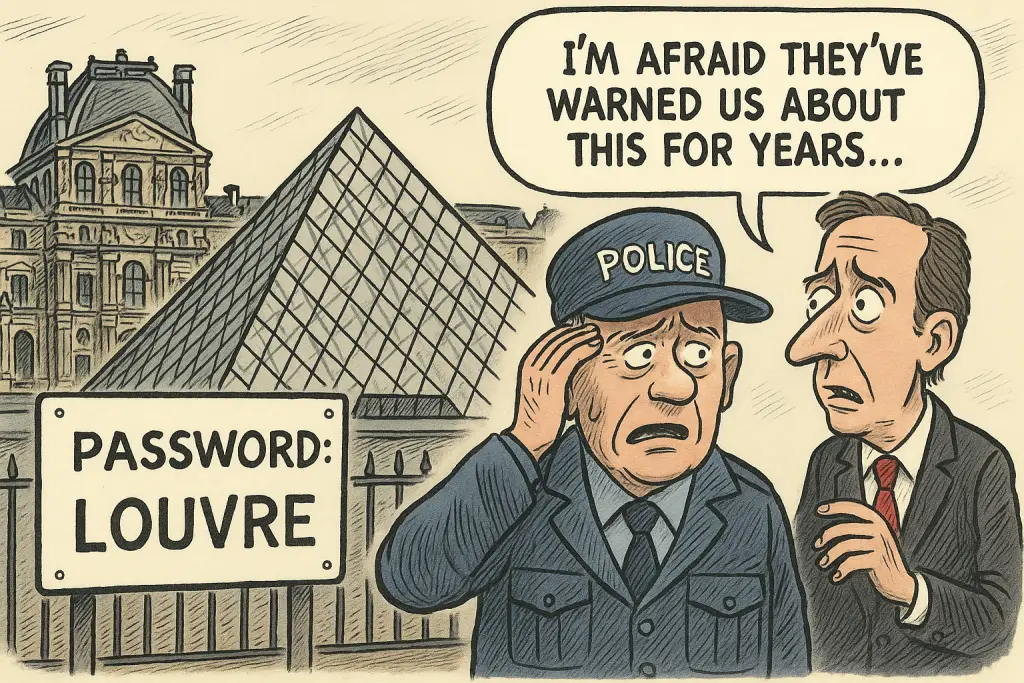
The French Interior Ministry has since launched a joint inquiry with the Ministry of Culture and the national police’s art-theft unit. Investigators are examining whether the heist involved insider knowledge or exploitation of neglected digital infrastructure. Preliminary findings suggest that attackers may have accessed control panels through remote connections that lacked multi-factor authentication—an elementary feature in modern surveillance systems.
Cybersecurity specialists say the incident illustrates a persistent gap between heritage management and digital defense. “Password governance remains one of the weakest links in institutional cybersecurity,” said a recent analysis by Red Hot Cyber. “When an organization uses its own name as a password, it signals a structural issue rather than an isolated error.”
Beyond embarrassment, the Louvre case has sparked a broader national debate about how public institutions handle technology in an age of increasingly sophisticated threats. France’s national audit office has urged accelerated digital reforms for museums, archives, and monuments that rely on legacy IT systems. Similar vulnerabilities have been documented in other European cultural institutions, where modernization efforts often lag behind visitor-demand upgrades.
For travelers, the Louvre remains a symbol of art, culture, and France’s global heritage appeal. The museum’s leadership has reassured the public that visitor safety and collection integrity remain unaffected. However, the reputational impact could linger, especially among international visitors who view the museum as a benchmark for cultural preservation.
The Paris tourism board said there has been no immediate decline in visitor numbers since the theft, but it acknowledged that “public perception of security is as important as actual risk mitigation.” The board added that it would coordinate with cultural institutions to reinforce both transparency and crisis communication strategies.
Meanwhile, authorities continue to track leads related to the stolen jewels, valued at several million euros. Officials have not ruled out the possibility that the items were smuggled out of France. Enhanced border checks and art-market monitoring are underway, supported by Interpol and European law enforcement networks.
The Louvre’s cybersecurity overhaul is now a top government priority, with the Ministry of Culture pledging a full modernization of its surveillance architecture by mid-2026. Officials say new systems will incorporate encrypted access, password rotation policies, and artificial intelligence monitoring tools to detect anomalies in real time. A formal report on the breach is expected before the end of November.
As the investigation unfolds, the password revelation stands as a cautionary tale for cultural institutions worldwide. It underscores that in the digital era, protecting priceless art depends as much on cybersecurity discipline as on physical vigilance. For one of the world’s most iconic museums, the lesson has come at a considerable cost.