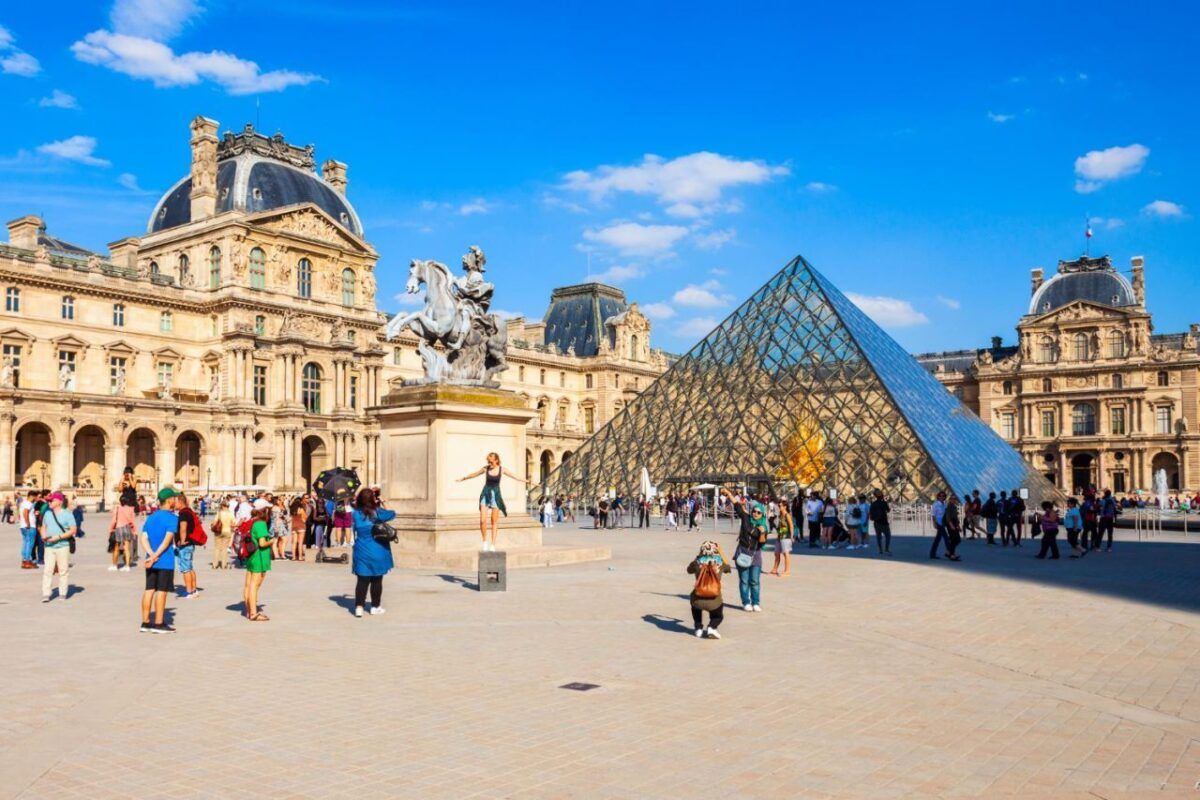
The Louvre Museum in Paris faces potential disruption from Monday as workers begin a strike over labor conditions, staffing shortages, security concerns and the deteriorating state of parts of the historic building, raising the prospect of closures or limited access for visitors.
Trade unions representing staff, including CGT, CFDT and Sud, have called the action amid mounting tensions following infrastructure failures, a high-profile theft of crown jewels in October and plans to raise ticket prices for non-European visitors in January. Union representatives said the strike could extend beyond a single day, depending on negotiations and management responses.
The planned industrial action comes as the Louvre continues to operate at record visitor levels, welcoming 8.7 million people in 2024, 69% of whom were international tourists. The combination of reduced staffing, aging infrastructure and recent security incidents has intensified concerns about visitor safety and the museum’s ability to function normally during one of the busiest periods for tourism in Paris.
Labor dispute and safety concerns at the world’s most visited museum
Union leaders say frustration among staff has reached a breaking point, citing years of underinvestment and job losses alongside rising visitor numbers. Christian Galani, a representative of CGT at the Louvre, said the situation had escalated to the point where industrial action now appeared unavoidable.
“There is such a level of exasperation that everything indicates that the conditions are ripe for a very powerful strike”, said Christian Galani, CGT Representative, Louvre Museum, in comments to BFMTV. He said unions are seeking urgent measures focused on the building’s condition and institutional security.
Galani said staff want management and the government to “prioritize and establish a hierarchy of emergency measures that must be implemented,” adding that the priority should be “the dilapidated state of the building and the security of the institution.” According to union figures, more than 200 jobs have been lost at the Louvre over the past 15 years, even as the museum’s popularity has grown to make it the most visited museum in the world.
The strike call follows a series of incidents that have heightened concern among staff. On 27 November, several hundred ancient books were damaged in a flood caused by faulty pipes in the museum’s antiquities library. The pipes were known to be in poor condition, according to reports cited by unions. Earlier, on 17 November, the museum closed an office area and, as a precaution, a nearby gallery of Greek antiquities after structural weaknesses were detected in beams in that part of the complex.
Ticket price rise, security fears and government response
Tensions have also been fueled by changes to ticket pricing scheduled to take effect on 14 January. Under the new system, the standard ticket price for visitors from outside the European Economic Area will rise from €22 to €32, an increase of 45%. Unions have opposed the measure, arguing that it introduces discrimination between European and non-European visitors and risks damaging the museum’s international image.
Galani said unions are calling for the abandonment of the price increase for non-European visitors, the creation of 200 new security jobs, higher wages and an end to what they describe as a pyramidal and compartmentalized governance model. The pricing policy has been defended by the French government as a way to fund much-needed restoration work.
Culture Minister Rachida Dati justified the decision, saying she wanted “non-EU visitors to pay more for their entry and for that surcharge to be used to finance the renovation of national heritage,” said Rachida Dati, Minister of Culture.
In parallel with the strike announcement, the Ministry of Culture said it has commissioned Philippe Jost, president of the public body responsible for rebuilding Notre Dame, to carry out a two-month mission to assess the Louvre’s challenges and propose reforms. In a statement, the ministry said the task is to recommend “the measures and changes needed to address the identified challenges and strengthen the heritage of the world’s largest museum.”
Jost will work under the supervision of Louvre President Laurence des Cars and in coordination with museum staff and the Ministry of Culture’s Directorate General for Heritage and Architecture. His initial recommendations are expected by the end of February 2026.
The current unrest has also been shaped by a major security breach on 19 October, when a group of thieves accessed the Apollo Gallery using a freight elevator during the day and stole jewels from the French crown collection. Although four suspects have since been arrested, the stolen items have not been recovered. The incident sparked widespread debate in France about security at national museums and added urgency to staff concerns.
For travelers, the strike threat introduces uncertainty at one of Paris’s most important attractions. While the museum has not yet confirmed closures, prolonged industrial action could lead to partial or full shutdowns, reduced opening hours or gallery closures. Tourism officials typically advise visitors to monitor official announcements from the Louvre and local authorities, particularly during periods of labor action in France.
The outcome of the dispute will depend on whether negotiations produce concessions on staffing, security and investment before or during the strike period. Until then, visitors planning trips to Paris this week face the possibility that access to the Louvre could be limited as staff press their demands.