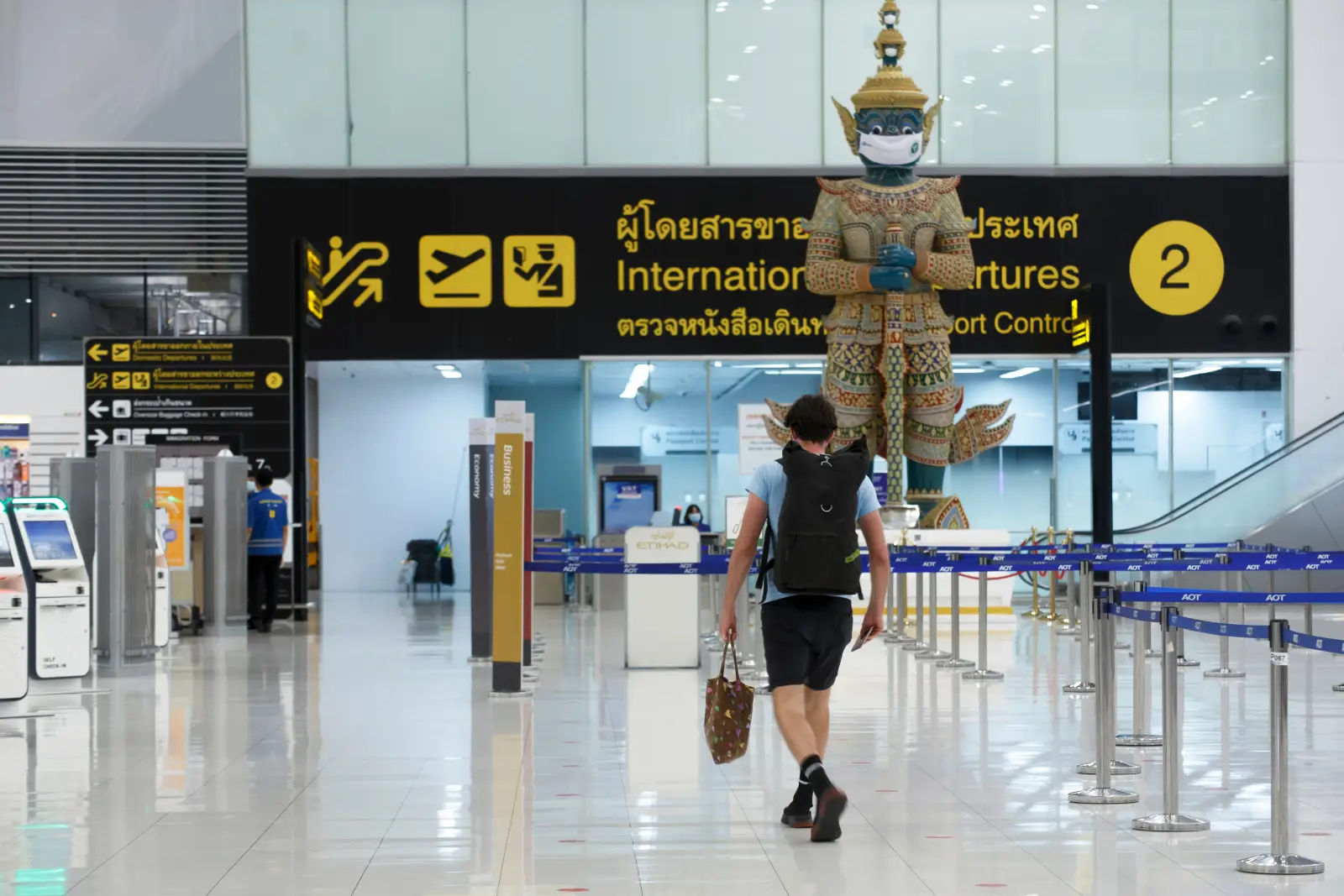
Since the Iran war erupted, more than 1,000 Thailand-bound flights mostly to Bangkok and Phuket, have been cancelled, according to Aeronautical Radio of Thailand.
Flight cancellations and airspace closures due to the war in Iran – especially those that affect Europe-Asia routes important for Thailand – are making trips more complicated and expensive, weighing on visitor numbers. Arrivals from Europe and the Middle East are already running 16 per cent below typical levels just weeks into the conflict.
Tourism accounts for about one-fifth of Thailand’s economy and a prolonged slowdown would hit a sector still recovering from the Covid-19 pandemic. Thailand’s tourism industry, which relies heavily on international travel, will feel the strain if long-haul demand weakens, particularly from Europe, the Middle East and Africa.
The nation’s tourism authority is targeting about 37 million foreign visitors this year, up more than 11 per cent from 2025. But that goal looks increasingly shaky and arrivals below 33 million would mark a second straight annual decline. As of mid-March, 7.9 million travellers had visited Thailand, with China, Malaysia and Russia the top source markets.
The number of foreign visitors to Thailand is at risk of falling to its lowest level in three years as the Middle East war threatens global travel, as reported by Bloomberg.
Hotels in Thailand cut prices
Concerned by a nosedive in European arrivals and low confidence due to fuel shortages among local travellers, hotel operators in Thailand have started to offer discounts % to attract tourists during the upcoming Songkran Water Festival holiday in mid-April.
European guests, who normally account for 30% of all visitors to Chiang Mai at this time of year, continue to cancel their bookings for April as they are unable to catch flights to Thailand.
The local hotel association said this market is expected to feel the impact for at least six months, even if the situation in the Gulf subsides, as travellers would lack confidence to book new trips in the near future.
In the short term, there are no new bookings from the European or Middle Eastern markets. Forward bookings for next month’s Songkran holiday have also dropped to 55-60% from 60-70%.
At present, the provincial authorities still plan to organise a 12‑day Songkran festival as usual, including traditional events and water‑splashing activities.
While discounts are common during the May-October rainy season, the breadth of current cuts also points to softer foreign demand, echoing the pandemic period, when Thailand lost tens of millions of visitors.
Luxury hotels wooing local residents
Thailand’s luxury hotels are also trying to woo local residents with steep discounts as traditionally reliable streams of foreign tourists dry up, partly due to travel disruptions from the Middle East conflict.
Thai residents and expatriates can now snap up prices up to 70 per cent off at five-star properties where nightly rates can typically approach US$1,000. A stay at Mandarin Oriental, Bangkok’s oldest hotel with a landmark riverside view, is now going for under US$300, including butler service and breakfast.
Photo Credit: Gumpanat / Shutterstock.com