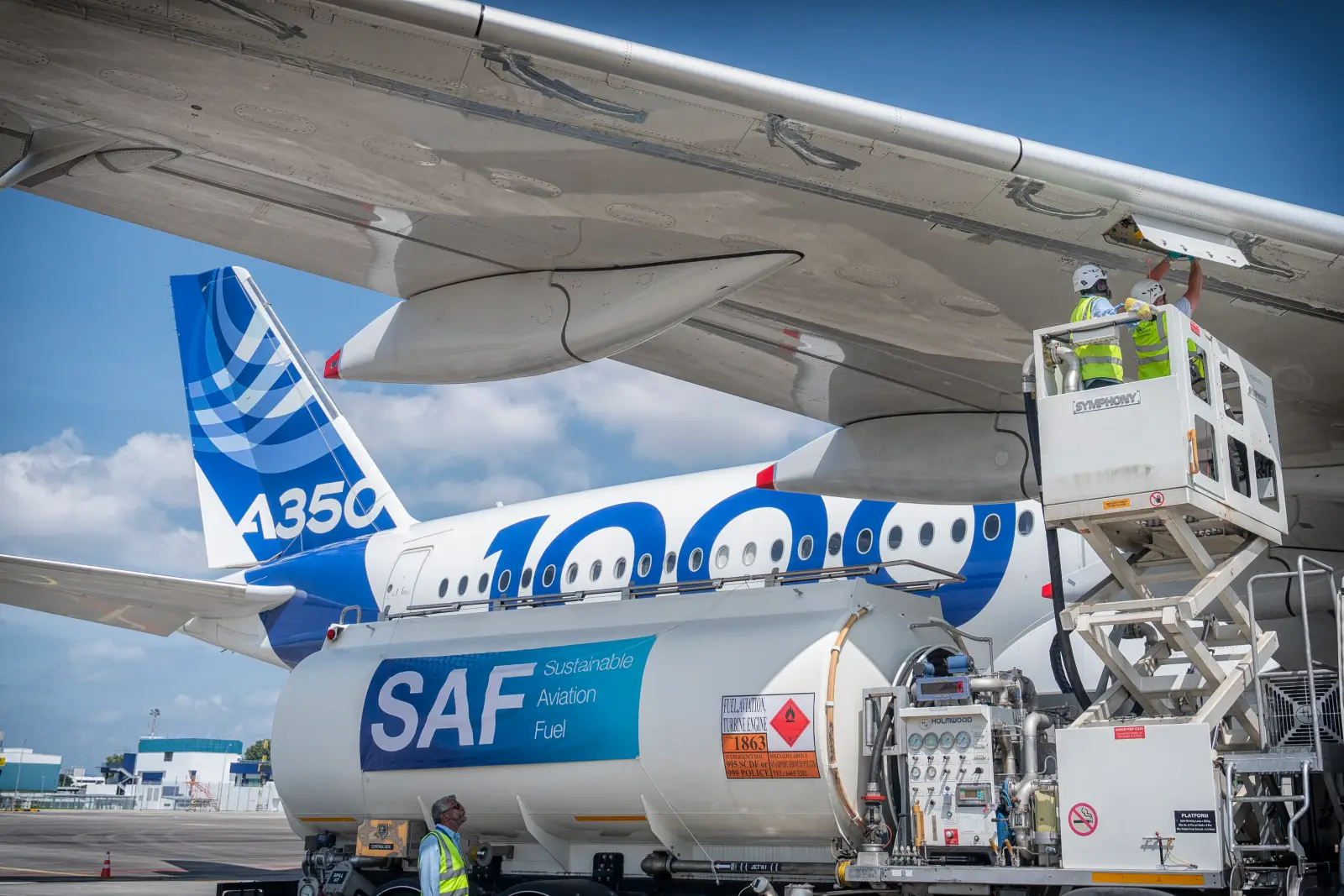
oneworld alliance and member airlines, in partnership with Breakthrough Energy Ventures (BEV), has announced the launch of a new investment fund designed to address the limited availability and high cost of today’s Sustainable Aviation Fuels (SAF).
The fund is led by cornerstone investors Alaska Airlines and American Airlines with IAG, Cathay Pacific, Japan Airlines from oneworld alliance, as well as Star Alliance member Singapore Airlines, as part of an initial $150M fund.
The fund is also supported by oneworld alliance member airlines International Airlines Group (IAG), Cathay Pacific, and Japan Airlines. Recognising the power of collective action, oneworld and Breakthrough Energy Ventures made an early decision to welcome non-alliance investors, including Singapore Airlines, which shares the alliance’s commitment to accelerating industry-wide progress in SAF.
BEV, Breakthrough Energy Venture’s capital fund founded by Bill Gates, will serve as the fund’s investment manager, bringing deep technical expertise, a rigorous diligence model, and extensive experience supporting the growth of early-stage climate technology companies.
Objectives of the Fund
The oneworld BEV Fund will invest in novel, next-generation SAF technologies; support the growth of alternative fuel markets to meet the long-term needs of the global aviation industry, drive technology innovation and develop a diverse and resilient SAF supply chain to meet future demand.
oneworld and its partners are focused on supporting new technologies that can scale the availability of cost-competitive SAF, while minimising other environmental impacts.
The alliance’s members include Alaska Airlines, American Airlines, British Airways, Cathay Pacific, Fiji Airways, Finnair, Iberia, Japan Airlines, Malaysia Airlines, Oman Air, Qantas, Qatar Airways, Royal Air Maroc, Royal Jordanian and SriLankan Airlines.
Challenges in investment
The global aviation industry, which generates some $4.1 trillion in economic activity and supports 86.5 million jobs, currently accounts for approximately 2-3% of global carbon dioxide emissions, in addition to other environmental impacts.
Airlines and manufacturers continue to invest in modern aircraft, engines and operational efficiencies. Demand for air travel is expected to rise in the coming decades, and SAF, which today can reduce lifecycle emissions of jet fuel by up to 80% compared to conventional jet fuel, is a crucial tool for mitigating the industry’s environmental impact.
While SAF can significantly decrease the carbon dioxide emissions from aircraft engines, the first-generation SAF in production today has come with challenges. The SAF industry has not yet attracted the investment required to scale production at competitive prices in line with market needs, and lifecycle environmental impact is a concern.
“The oneworld BEV Fund is built to identify and scale breakthrough SAF technologies that can deliver real emissions reductions for jet fuel, compete with fossil-based fuels on cost, and integrate seamlessly with today’s aviation infrastructure. These are complex systems-level challenges that will take time to solve, and the fund is built with the long-term vision and staying power to help bring solutions to market,” said Eric Toone, chief technology officer at Breakthrough Energy and managing partner at Breakthrough Energy Ventures.
Breakthrough Energy Ventures has raised more than $3.5 billion in committed capital and partnered with more than 110 groundbreaking companies.
Other recent developments
In June, the International Air Transport Association (IATA) announced the Sustainable Aviation Fuel Matchmaker platform to facilitate SAF procurement between airlines and SAF producers by matching requests for SAF supply with offers.
IATA estimated in June that production of SAF is expected to reach two million tonnes, or 0.7 per cent of airlines’ fuel consumption, in 2025. Under the ReFuelEU Aviation requirement, airlines need to have a six per cent SAF blend in their jet fuel usage by 2030. The EU is offering some subsidies for SAF purchases by airlines.
In March, Airbus launched a new initiative called the “Book and Claim” system to make SAF more accessible and scalable.
Photo Credit: Ivan Marc / Shutterstock.com