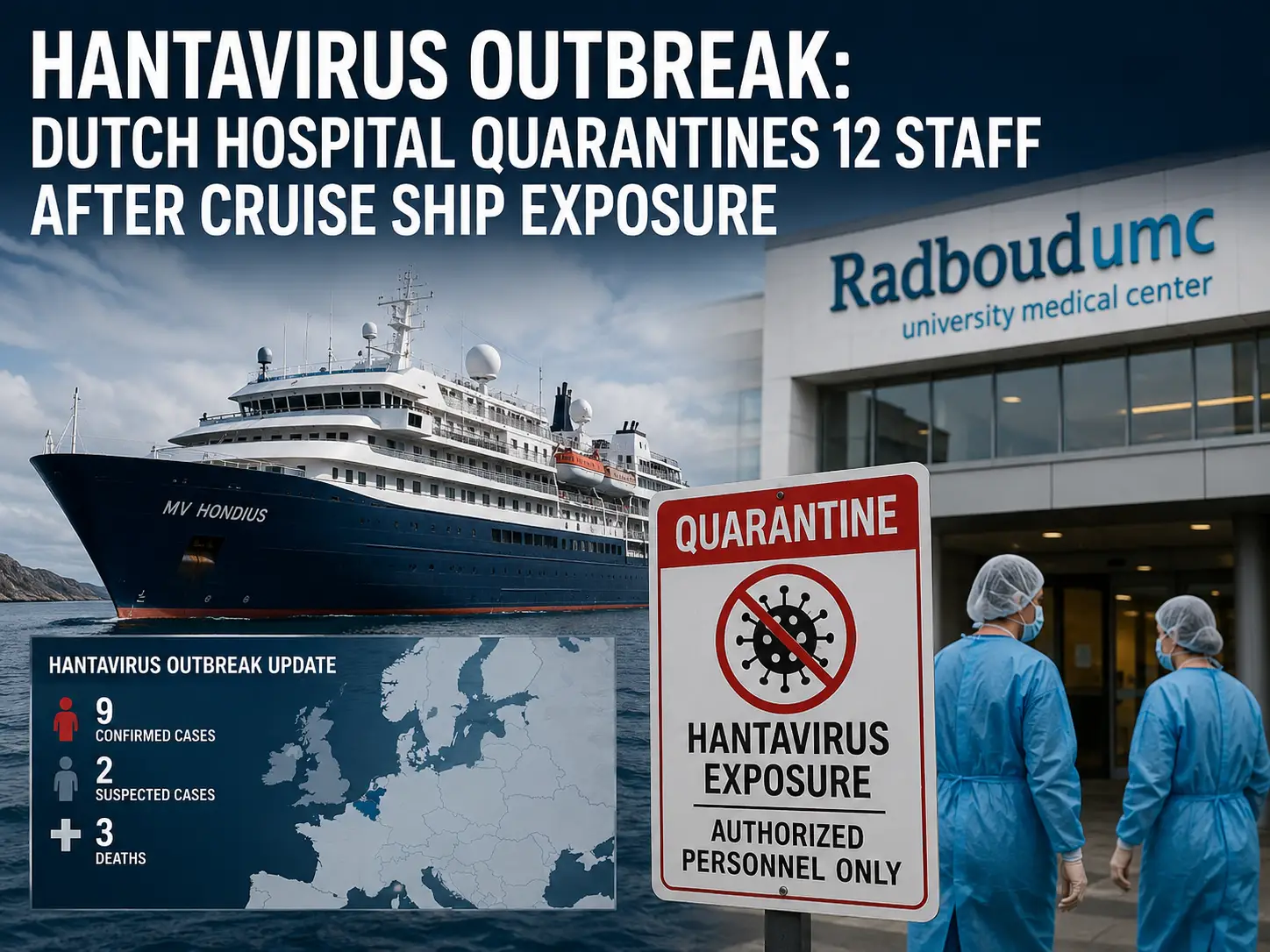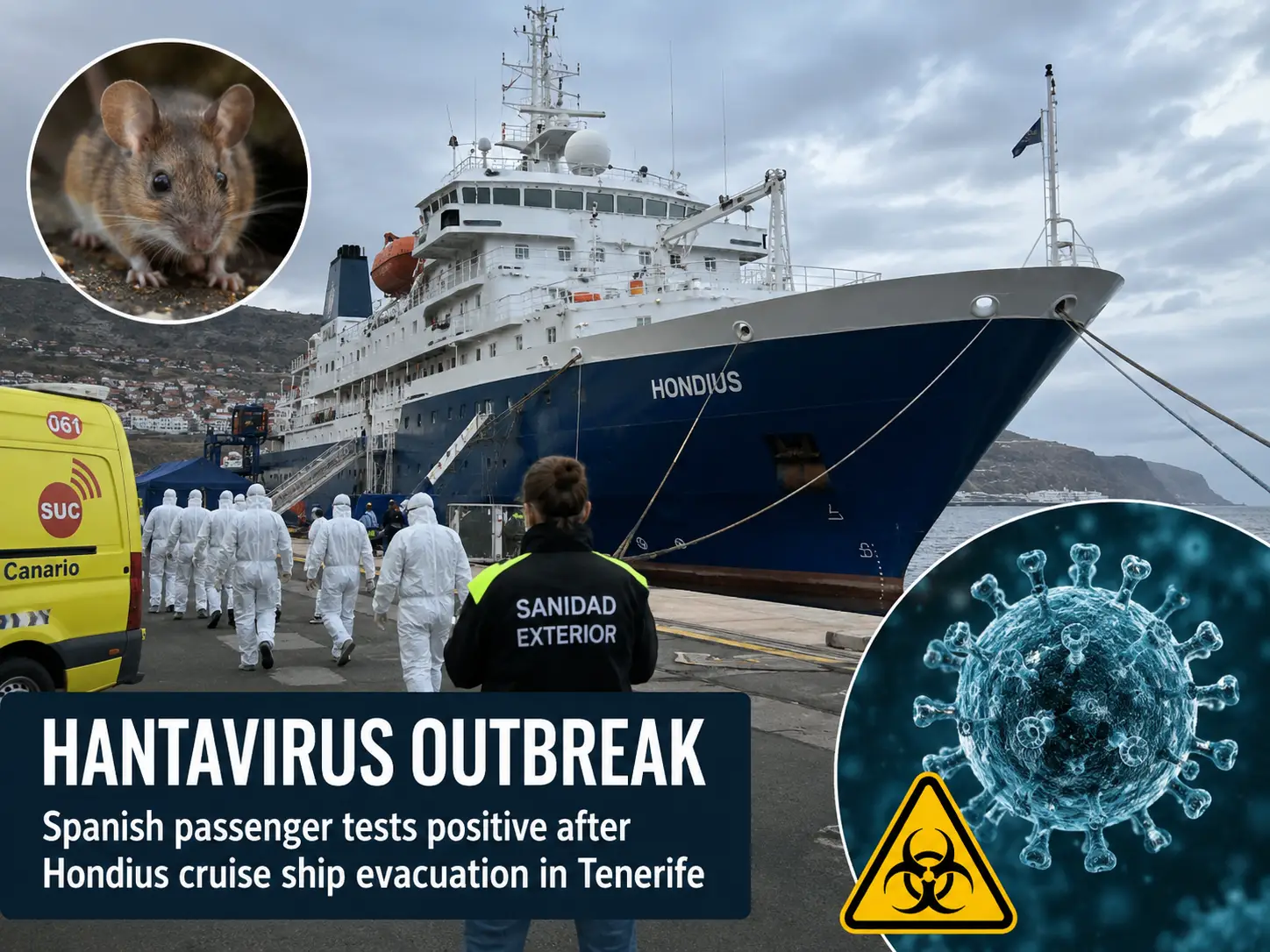
A cruise ship linked to a hantavirus outbreak has left Cape Verde and headed for Spain’s Canary Islands after three people were evacuated, according to the World Health Organization. The vessel had nearly 150 people on board, with passengers isolated in their cabins as the ship continued its journey.
Two patients with hantavirus and one suspected case were taken off the ship on Wednesday, the UN health agency said. The ship then sailed on towards the Canary Islands, where authorities were expected to monitor the situation closely.
Hantavirus is a group of viruses spread mainly by rodents and their urine, droppings or saliva. It can cause a range of illnesses in humans, from mild fever to severe and sometimes fatal disease, depending on the strain.
The outbreak comes as cruise operators and port authorities remain under pressure to manage infectious disease risks at sea. Ships can become difficult environments for containment because passengers live in close quarters and may share air and common areas for long periods.
The World Health Organization did not give further details on the identities of those evacuated or their condition. It also did not say how the suspected cases were identified before the ship departed Cape Verde.
Health officials typically respond to hantavirus cases by isolating suspected patients, tracing contacts and reducing the risk of exposure to infected rodents. On ships, that can involve confining passengers to cabins and limiting movement while testing and evacuation plans are arranged.
The cruise ship’s destination in Spain’s Canary Islands puts the incident in the spotlight for a major European tourism hub. The islands receive millions of visitors each year and are a frequent stop for cruise itineraries in the Atlantic.
Travel health experts say outbreaks onboard can quickly affect itineraries, passenger confidence and local port operations. They often lead to delays, inspections and extra screening as ships approach destination ports.
Hantavirus outbreaks are uncommon on cruise ships, but public health officials treat them seriously because of the potential for rapid spread in confined spaces. The latest case follows a period in which travel operators have had to respond to a range of infectious disease alerts around the world.
No wider warning has been issued to travellers, but passengers on the vessel are expected to remain under observation as the ship reaches the Canary Islands. The focus now is likely to be on treatment of the evacuated patients and checks for any further infection among those still aboard.