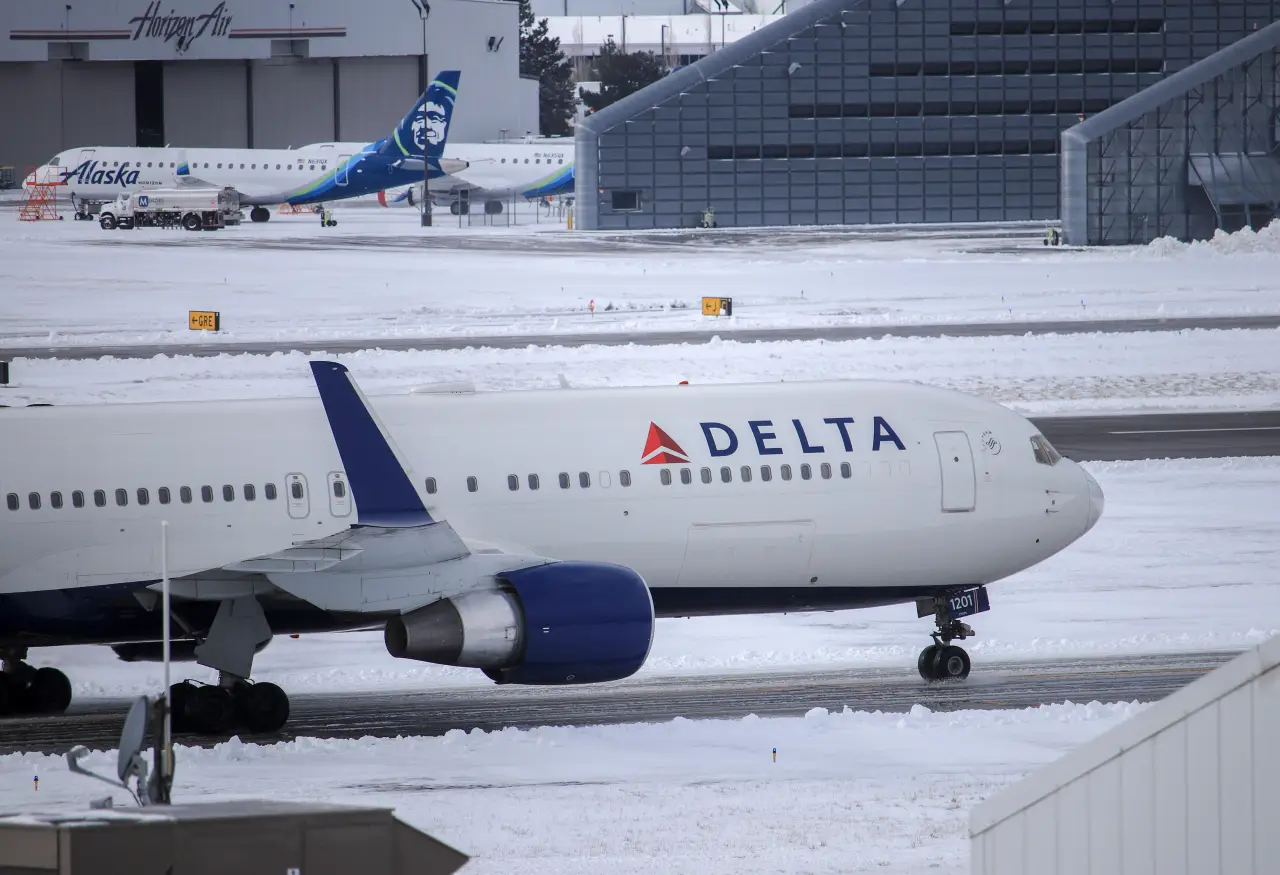
Airports, highways and rail lines across the United States are bracing for cascading disruptions as a powerful winter storm begins to tighten its grip.
Nearly 1,300 flights have already been canceled nationwide through Saturday as a sprawling storm prepares to sweep across more than 40 states from Arizona to Maine, according to FOX Weather. Airlines warn that thousands more cancellations and delays are likely into early next week as snow, ice and dangerous cold expand eastward.
Major carriers began trimming schedules days in advance, issuing widespread travel waivers and repositioning crews as the storm’s path became clearer. Transportation agencies and state emergency officials are also preparing for prolonged periods of hazardous driving and potential power outages, especially in regions facing heavy ice accumulation.
The takeaway for travelers is straightforward: air and ground travel across much of the country will be significantly disrupted for several days, with early cancellations intended to limit safety risks but likely to trigger rolling delays as the storm moves through major transportation hubs.
Airlines cancel flights and expand travel waivers
American Airlines said 16% of its Saturday schedule has been canceled, while Delta Air Lines has already grounded flights in five states ahead of the storm’s Friday arrival and its projected exit late Monday. Both carriers emphasized safety concerns tied to icing, reduced visibility and crew positioning across affected regions.
The cancellations follow a wave of travel waivers issued earlier in the week by most major airlines, covering dozens of airports across the eastern two-thirds of the country. United, Southwest, JetBlue and Spirit have also expanded flexible rebooking policies as the forecast solidified.
Air travel hubs expected to feel the greatest impact include Dallas, St. Louis, Nashville, Charlotte, Atlanta, Washington, D.C., and New York, where snow and ice could disrupt runway operations and aircraft positioning. Airlines typically cancel proactively in these scenarios to avoid stranding aircraft and crews once conditions deteriorate.
Delta said it has canceled flights in North Texas, Oklahoma, Arkansas, Louisiana and Tennessee and is working on “adjusting staffing levels to ensure that teams are in place” to support customers, according to a company press release. Similar staffing and aircraft repositioning efforts are underway across the industry.
Travel experts say passengers who wait for official cancellations often face limited rebooking options and crowded customer service lines. “Proactively changing flights before cancellations hit is going to save you frustration,” said Dayvee Sutton, national travel expert.
Even travelers who manage to depart on schedule could encounter problems connecting through affected hubs, where cascading delays often ripple for days after a major storm. Airlines caution that recovery can be slow when multiple regions experience overlapping weather hazards at the same time.
Road conditions and regional impacts add to travel risks
The storm’s southern flank is expected to deliver a paralyzing ice threat across more than 15 states stretching from New Mexico through the Deep South into parts of the Carolinas and Mid-Atlantic. Ice accretion in this corridor could weigh down power lines and trees, increasing the likelihood of outages and blocked roadways.
Farther north, heavy snow is forecast across the mid-Mississippi and Ohio valleys, while the Interstate 95 corridor in the Mid-Atlantic and Northeast could see its most significant snowfall in years. Forecasters expect rapid accumulation in some metro areas, complicating both airport operations and ground transportation.
Transportation departments are preparing for extended operations, pre-treating highways and positioning emergency resources. Crews in Dallas have begun salting roads ahead of freezing rain and snow expected by Friday afternoon, while Louisiana officials say they are preparing New Orleans roadways for winter conditions.
North Carolina and South Carolina have declared states of emergency, with officials urging residents to prepare now and limit travel through the weekend. Emergency managers warn that even short trips could become dangerous if freezing rain develops faster than crews can treat road surfaces.
Interstate corridors across the South and Midwest are expected to experience periods of nearly impossible driving, particularly along Interstates 40, 20 and portions of Interstate 10, where icing is most likely. Major north-south routes, including Interstates 35, 81, 75, and 65, could also see sustained closures or slowdowns.
In the Northeast, heavy snow is forecast along the I-81, I-80 and I-95 corridors beginning Saturday night, raising concerns about commuter rail schedules and airport ground delays. Transit agencies in the New York metropolitan area have advised riders to monitor real-time service updates as conditions evolve.
The New York City tri-state area could receive more than a foot of snow for the first time since 2021, when over 17 inches fell during a major winter event. City officials have urged residents to complete storm preparations early and avoid unnecessary travel once snowfall intensifies.
Amtrak has announced service changes across parts of its network as crews monitor the storm’s track and prepare contingency schedules. Rail operators typically slow or suspend service when ice accumulation threatens overhead power systems or when drifting snow reduces track visibility.
For travelers determined to move this weekend, experts recommend checking airline apps frequently, signing up for text alerts, and keeping flexible backup plans in place. Weather conditions may change quickly, especially near the storm’s transition zones where snow can flip to sleet or freezing rain.
Officials also urge motorists to carry emergency supplies, including blankets, food, water and fully charged mobile devices, in case of prolonged delays or closures. With multiple regions facing overlapping hazards at once, response resources could be stretched thin during peak periods of the storm.
As the system continues eastward into early next week, transportation agencies expect lingering disruptions even after precipitation ends, particularly in areas where ice accumulation slows power restoration and roadway clearing. Travelers are advised to monitor local forecasts and transportation updates closely before finalizing any plans.
Photo Credit: EchoVisuals / Shutterstock.com