In northern Italy, the countdown to the Milano–Cortina 2026 Winter Olympics has become a real-time stress test for the travel economy: can a mega-event built on a “spread-the-venues” model deliver a tourism uplift without the sticker shock and crowding that can sour visitor sentiment and local support?
Early indicators suggest the Games will indeed widen the economic footprint across multiple gateways—but that the pricing pressures are arriving early, unevenly, and with clear implications for tour operators, airlines, hotels, and destination managers.
Unlike many past Winter Games concentrated in a single mountain cluster, Milano–Cortina 2026 is structured around multiple hubs—Milan for ceremonies and indoor events, Cortina d’Ampezzo for marquee alpine competition, and other Alpine locations across Northern Italy. Oxford Economics argues this higher-capacity, multi-destination design is intended to spread visitors across regions, sustain travel gains longer, and avoid the sharp congestion associated with more compact host models. In its January 2026 research briefing, Oxford Economics forecasts Italy will welcome 66.7 million international arrivals in 2026 (up 9.3% year over year), with Milan outpacing the national trend (arrivals rising 10.7%). It also projects domestic nights spent in Italy will rise 5.0% to 229 million in 2026, helped by the dispersed venue model and improved rail access that can limit choke points.
For the travel trade, this architecture matters as much as the medals. It creates a larger menu of itinerary options—city-and-ski combinations, multi-stop packages anchored by Milan and fanned out to mountain venues, and spillover stays in secondary cities. Oxford Economics explicitly points to Venice and Verona as beneficiaries, with Milan acting as the main gateway.
But the Olympics effect is already showing up most loudly in pricing. Several independent reports and consumer-focused analyses describe pronounced rate inflation in the mountain venues, where bed capacity is limited and peak winter demand is already structurally high. A January 2026 analysis, citing figures from consumer group Altroconsumo and travel data analysis sources, reports that a weekend across key host areas averages around €1,800 for two people, with peaks above €3,000 in Cortina. The same article cites a study referenced as Almawave estimating visitor spending for hotels, restaurants and transport could exceed €291 million, and cites average nightly rates up to €1,752 in Cortina and €412 in Milan for the opening ceremony period.
Local and travel media have also flagged steep accommodation inflation in the Alpine valleys. For certain locations and dates, overnight prices have risen multiple times versus a typical winter weekend, with private rentals in some cases reaching several thousand euros for a short stay. While methodologies vary between outlets, the direction of travel is consistent: the high-altitude markets are behaving like capacity-constrained festival cities, where demand surges meet a hard ceiling on supply.
For tourism businesses, the crucial nuance is not simply that prices rise during an Olympics—it is where they rise and how that rise affects conversion. Even in pre-sale “window shopping,” travel analysts have noted that vacation rental rates for Olympic-timed stays appear double or triple year over year in some searches, encouraging travelers to lock in refundable rates early and re-check pricing as inventory shifts.
There are also signs of a “two-speed” market forming: Milan retains a wide hotel base and diverse price points, while the mountain venues tilt premium. An NBC Bay Area consumer report, using early searches and travel-industry commentary, described hotel options in Milan ranging from luxury at over $1,200 per night to budget rooms around $143 per night near the airport, alongside the expectation that Olympic demand will elevate rentals and rates.
Where the money goes: from infrastructure to visitor spending
Pricing pressures are arriving as Italy continues to manage the broader Olympics balance sheet. A February 2026 FIRSTonline report, citing updated assessments attributed to S&P Global Ratings, puts the overall organization and investment envelope at roughly €5.7–€5.9 billion and notes that public spending covers about 63% of the total. It also reports that S&P estimates an ~80% budget overrun versus initial planning assumptions, driven by inflation, energy price increases, and design changes.
That macro context matters for travel and hospitality because the legacy story—how easily visitors can reach venues, how well local transit performs under peak demand, and whether the destination benefits persist beyond the closing ceremony—depends heavily on infrastructure delivery. In the same report, roughly €4 billion of the near-€6 billion total is described as going to permanent infrastructure intended to last beyond the two-week event, with an emphasis on reuse and upgrades rather than a spree of new “white elephant” stadiums.
On the demand side, Reuters reporting quoted in a January 2026 finance-industry republication says the Italian government expects 2 million visitors and a global audience above 3 billion, while stating overall budget figures around €5.2 billion (with a public infrastructure component and a private funding component for staging the event).
Even older pre-Games academic modeling—useful as a directional indicator rather than a real-time forecast—suggests meaningful local multipliers. A Bocconi University report prepared during the bid phase estimated, for one modeled region, a total increase in production of roughly €2.85 billion, value added of about €1.22 billion, and 22,170 full-time equivalent jobs from investment, operations, and tourist/athlete expenditures, along with an estimated fiscal impact of about €304 million.
The pressure points: hotels, rentals, and the optics of “luxury-only” Games
For tourism leaders, the immediate risk is a familiar one: if the event becomes widely perceived as unaffordable, it can suppress mass-market demand and nudge leisure travelers to watch from home—particularly when the Winter Games are hosted in a destination that is already a premium ski market. Several reports describe a narrative emerging that the event could become a “luxury” experience in the Alpine venues, where limited capacity encourages property owners and operators to chase peak yields.
At the same time, higher prices are not automatically higher profits. Yield management gains can be undermined by volatility: longer booking windows, policy changes on short-term rentals, and last-minute supply releases can create sharp swings. This is why many travel advisors are counseling clients to secure refundable inventory early and to monitor prices for rebooking opportunities—an approach highlighted in consumer travel guidance for Milan 2026.
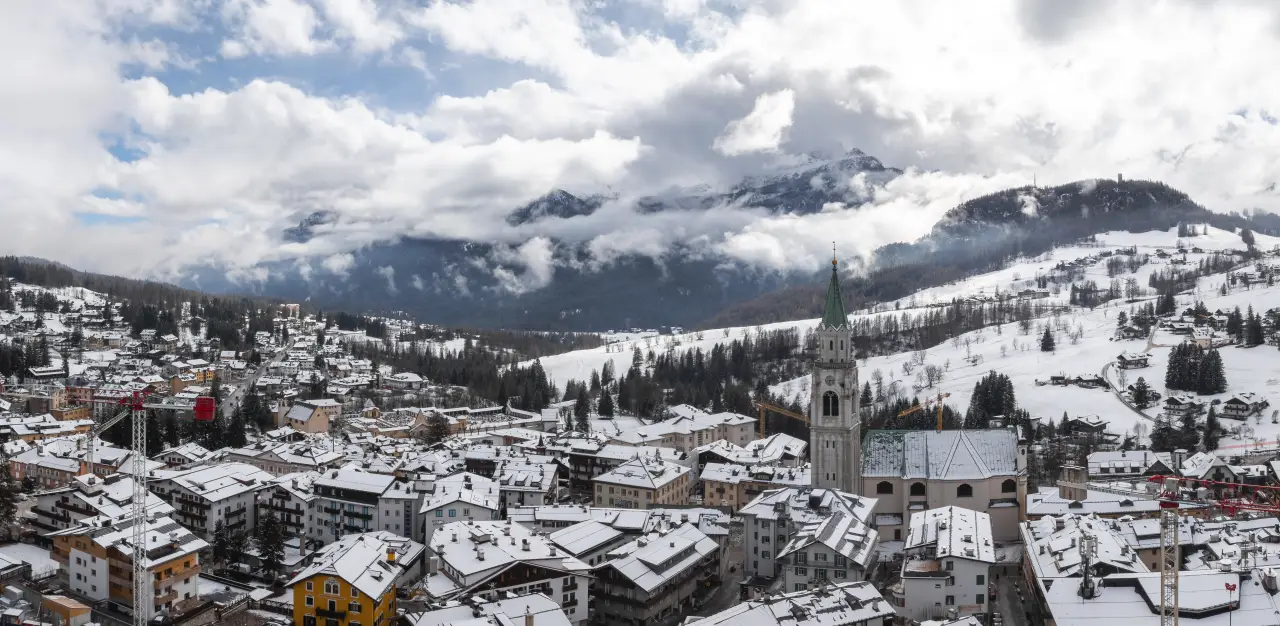
For destination managers, the optics matter as much as the spreadsheet. If price spikes coincide with perceptions of limited transparency or a sense that locals are being displaced, reputational costs can outlast the Games. One locally focused account of Cortina’s experience describes the town’s property market as having seen an “exponential rise” in prices, fueled by external investors, with fears of pushing residents out and increasing the share of second-home ownership. While not an official economic study, it reflects a strain that tourism authorities across Europe increasingly must address: when global events collide with small communities, housing and workforce availability can become the binding constraints on growth.
What it means for the travel trade: sell the network, not a single postcode
For tour operators and wholesalers, the multi-destination model is not just a branding angle—it is a pricing strategy. The most practical hedge against peak Cortina pricing is to sell itineraries that combine Olympic sessions with stays in better-supplied urban or secondary markets, using rail and coach connectivity to move guests. Oxford Economics’ expectation of broader benefits for gateways such as Venice and Verona suggests that these “base-and-branch” packages can align with how demand is likely to spread.
For hotels, the Olympics will likely separate operators into two groups. Those in the tight-supply Alpine venues face the temptation of aggressive rate positioning, but must manage guest expectations and service delivery under maximum occupancy conditions. Those in Milan and secondary cities face a more complex job: capturing a global surge without pricing themselves out of the market, while using flexible inventory and minimum-stay tactics to reduce churn and operational strain.
For airlines and transport providers, the upside is obvious: the event creates a predictable peak in bookings and a multi-airport gateway dynamic. The travel-trade opportunity is to match flight schedules, rail capacity, and event calendars into coherent packages that reduce friction—because when prices rise, travelers become less forgiving of missed connections and unclear transfers, especially with airline and rail strikes already scheduled for February that could compound congestion and disrupt peak-season travel.
Tickets, accessibility, and the “last-mile” problem
Ticket pricing is another variable in the affordability equation, but it interacts with a more practical factor: the ability to get people to venues safely and efficiently. A late-2025 Forbes guide to buying Milano–Cortina 2026 tickets notes that ticket prices generally start around €50 for some sessions, while also highlighting logistics and capacity constraints around certain high-demand competitions and access routes.
For the tourism industry, this reinforces an important lesson from other mega-events: affordability is not just the price of the seat—it is the total trip cost, including accommodation, transport, and time. If last-mile transport becomes a bottleneck, the market’s response is often to raise prices further for anything close to the venue. That magnifies rate inflation and increases the probability of negative visitor reviews—especially among first-time travelers who underestimate winter mobility constraints.
Managing the boom: sustainability and the long tail
Italy’s organizing narrative emphasizes reuse and sustainability—an approach that, if executed well, can support tourism beyond 2026. An academic overview published by the Michigan Journal of Economics describes Milan–Cortina’s planning as relying heavily on existing or temporary venues and circular-economy concepts, including repurposing the Olympic Village for longer-term community use.
However, legacy benefits are not automatic. The experience of past Games shows that short-term surges can evaporate quickly if destinations do not actively convert the “Olympics spotlight” into repeat visitation. Oxford Economics’ thesis is that a dispersed model can help extend demand beyond the event period; the operational challenge for tourism stakeholders is turning that extended demand into a diversified product pipeline—winter sports, shoulder-season hiking and culture, and city breaks anchored by Milan.
What to watch between now and the opening ceremony
Three indicators will help the industry judge whether pricing pressures remain manageable or become a structural problem. First, the spread between Milan and the Alpine venues: if the mountain rate inflation accelerates further, more visitors will base in cities and commute, raising pressure on rail and regional transport. Second, short-term rental policy and enforcement: any tightening could reduce available supply and push even more demand into hotels. Third, traveler sentiment: if the narrative shifts decisively toward “priced out,” demand may soften, creating late availability and volatile repricing—good for opportunistic buyers, challenging for operators relying on fixed allotments.
The economic case for Milano–Cortina 2026 is built on a broad footprint: infrastructure upgrades, visitor spending, and a stronger global tourism brand for Northern Italy. But the travel market will ultimately judge the Games less on aggregate projections and more on the lived experience: whether guests feel they received value, whether local communities feel included rather than displaced, and whether the industry can channel a short, intense peak into a longer, more sustainable runway.
Photo Credit: NorthSky Films / Shutterstock.com