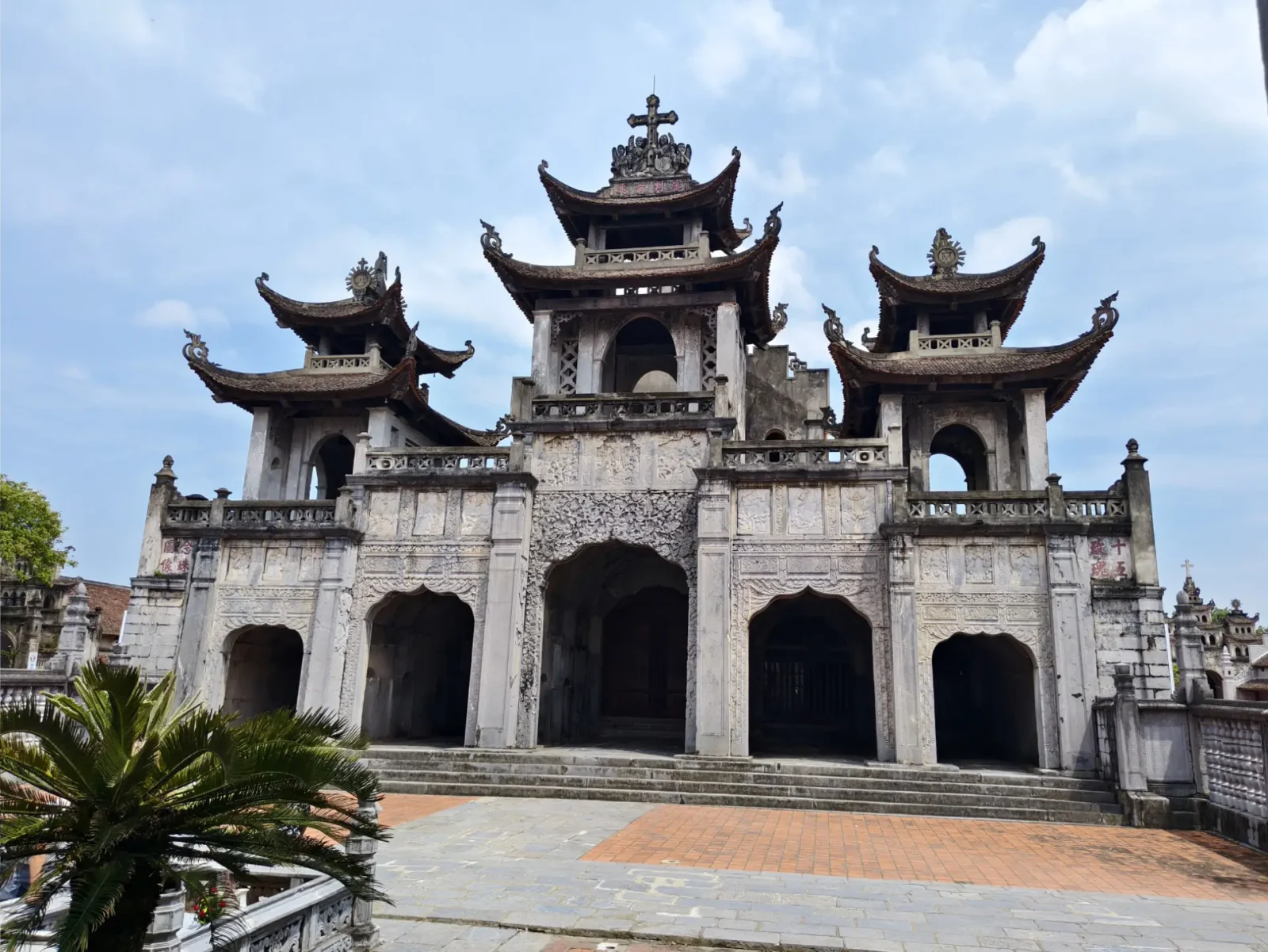
The Phat Diem Stone Cathedral is known as Vietnam’s most beautiful Catholic church and is closely associated with the development of Catholicism in Vietnam. The church located in Ninh Binh, in northern Vietnam, is built entirely of stone and wood. The stone used in the construction was sourced locally, adding to the authenticity and charm of the design.
The cathedral is more than 120 years and was built over a period of 30 years at the end of the 19th century. It is one of the most historically and architecturally significant religious sites in Vietnam, like the Bao Dinh pagoda complex also in Ninh Binh.
Unlike other churches in Vietnam, the highlight of the stone church’s architecture is the harmonious combination of Eastern and French Catholic (Gothic) architecture. The space features feng shui elements with the lake in front and the mountain behind it. The pond not only enhances the beauty of the cathedral grounds but also serves as a tranquil space for reflection and meditation.
The cathedral complex, which spans an area of 22 hectares, includes the main church, five smaller churches, a bell tower, and artificial caves, creating a solemn but serene atmosphere.
The Grand Cathedral

The most distinguishing feature of this majestic grand church on its exterior is the roof that is covered with fish-tail tiles with delicate curved ends. I had visited on a Sunday morning and a mass was being held, with hymns sung beautifully in Vietnamese, creating a solemn and sacred atmosphere. Visitors can check the church’s online schedule for timings of mass conducted in English.

Beautiful wooden beams and pillars, detailed carvings and a delicately sculptured altar adorn the interior of the cathedral.
The centrepiece, behind a large crucifix, is a statue of the Virgin and Child, but the whole altar is completely covered by a background of elaborate crimson lacquer and gold leaf, which gives it a holy grandeur. It is indeed breathtaking and awe-inspiring to view this scene.

The use of traditional Vietnamese carpentry techniques is evident in the finely crafted wooden beams and pillars.
Bell Tower

Phuong Dinh, also known as the bell tower, is probably the most photographed building at the church complex due to its striking architectural features, which dominates the landscape. The tower, which stands in front of the grand church, features curving “boat” roofs, a characteristic element of Vietnamese pagoda design.
The central tower block has a 1.5m-tall bell weighing two tons. A climb to the top of the bell tower provides a scenic view of the town. The remaining four blocks on the top are statues of saints, placed like lotus buds, showing the harmony between Eastern and Western cultures.
Chapel of Immaculate Heart of Mary

At the centre of this chapel, the statue of the Virgin Mary serves as a focal point. Its details, particularly the glowing heart which the chapel is named after, are exquisitely crafted. The red heart symbolises the love that the Virgin Mary holds for humanity.
Four Smaller Chapels


This complex is also home to four other smaller chapels that were built on both sides of the main church. Each church has a unique design, both in terms of exterior and interior.
St. Rocco Chapel portrays scenes of St. Rocco on the inside, healing the sick and helping the poor, reflecting his role as the patron saint of the ill. St. Joseph Chapel highlights St. Joseph’s role as the protector of families and workers. The other chapels are the Chapel of Sacred Heart of Jesus and the Chapel of St. Peter.
Other features


There are also outdoor places of worship which feature the statue of the Virgin Mary and saints. All the surrounding buildings have intricate carvings and designs, and it is a joy for me to walk around this complex.
There is no entrance fee but there are donation boxes placed around the complex for visitors to donate some cash if they wish to do so. There are small cafes and souvenir shops at the entrance to the complex.