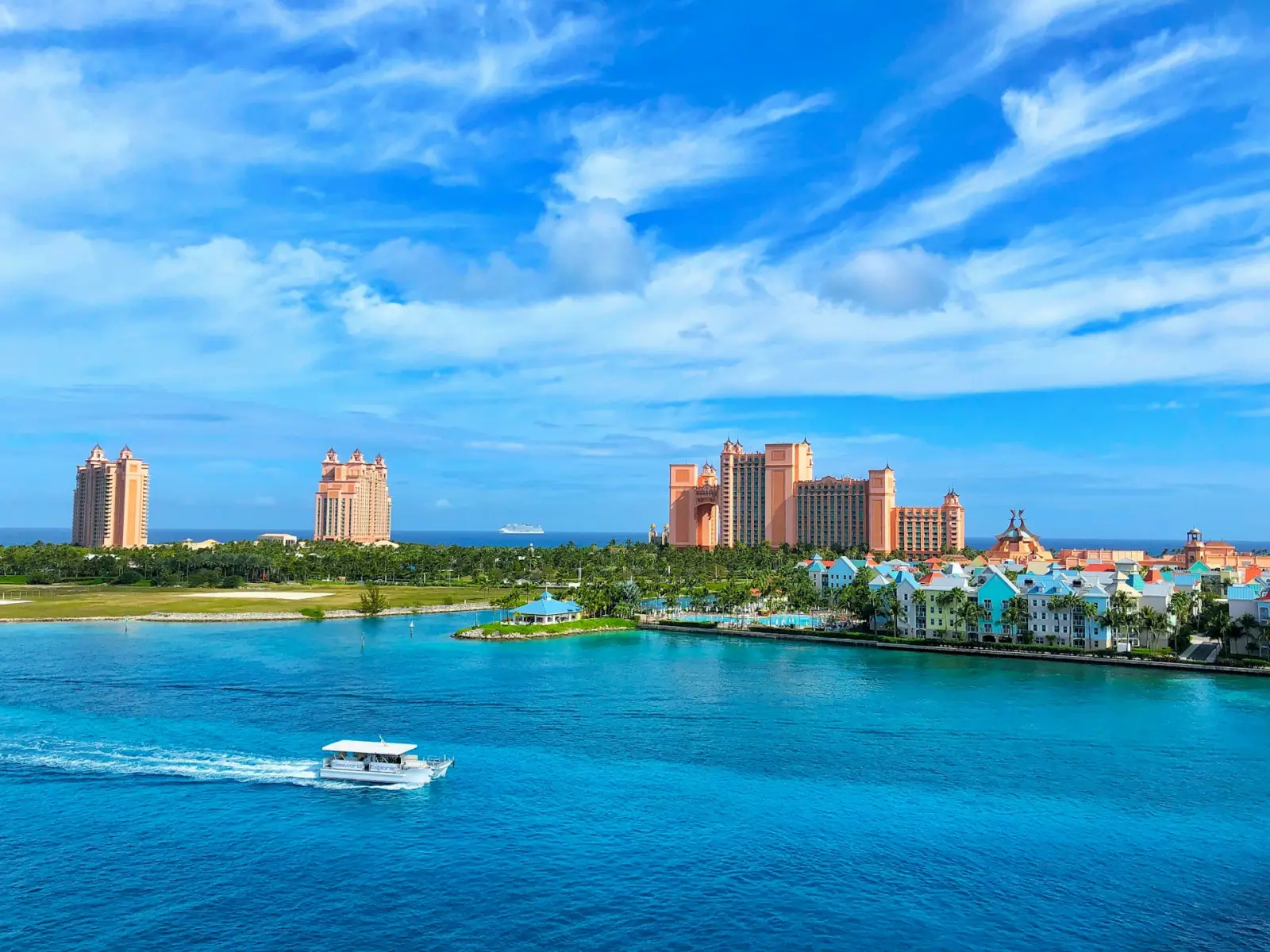
Introduction The global coastal tourism sector is witnessing a paradigm shift. With travel revenue projected to hit new highs in 2026, the modern guest demands more than just a sea view—they demand “experiential travel.” From direct water access to on-water dining, the competition is no longer defined by the lobby, but by the shoreline.
However, traditional resort infrastructure faces a critical bottleneck. Fixed concrete or wooden docks are capital-intensive, environmentally invasive, and notoriously inflexible regarding changing water levels or seasonal tides. Consequently, the hospitality industry is rapidly pivoting towards modular High-Density Polyethylene (HDPE) floating systems. These solutions allow developers to deploy amenities rapidly while adhering to increasingly strict environmental regulations.
The Experience Economy: Expanding Beyond the Shoreline
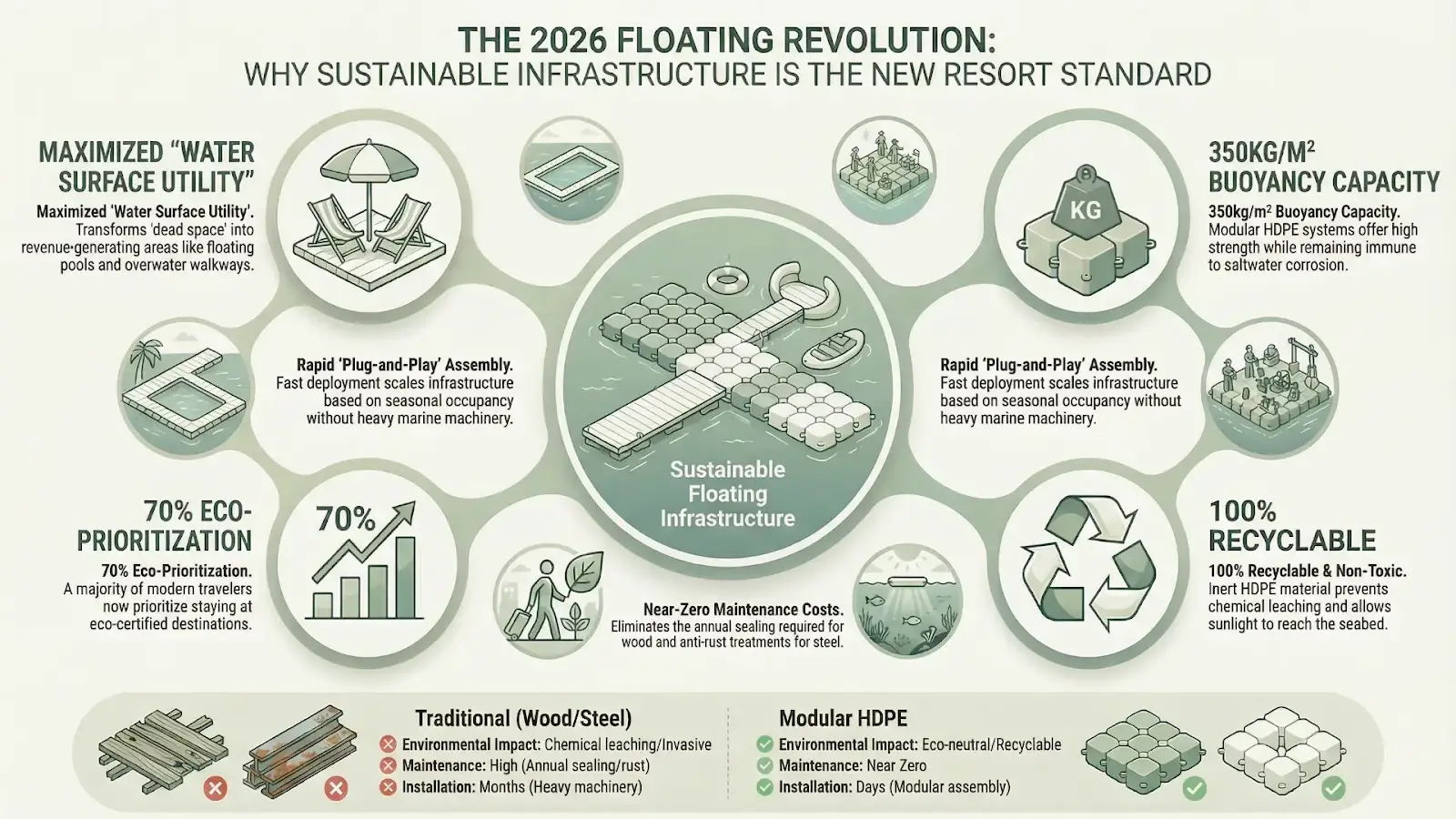
Resorts are realizing that maximizing “water surface utility” is the new revenue frontier. It is no longer sufficient to offer a beach chair; high-end destinations are extending their footprint onto the water itself.
Current market trends indicate a surge in:
- Floating Swimming Pools: Allowing safe swimming in areas with currents or jellyfish.
- Jet Ski Platforms: enhancing safety and equipment longevity.
- Overwater Walkways: connecting guests directly to coral reefs or offshore bars.
By activating the water surface, hotels transform “dead space” into premium, revenue-generating square footage without the need for permanent land reclamation.
Overcoming Engineering Challenges with Modular Design
The logistical nightmare of marine construction—piling, heavy machinery, and months of disruption—is being rendered obsolete by modular technology. The “plug-and-play” nature of modern systems allows resorts to scale their infrastructure up or down based on seasonal occupancy or weather patterns.
From an engineering standpoint, the shift is driven by durability and deployment speed. Unlike traditional fixed piers that require extensive permitting and heavy construction phases, modular units allow for rapid assembly. According to technical specifications from manufacturers like Hisea Dock, modern high-density polyethylene (HDPE) systems can be assembled in a fraction of the time required for timber structures. These systems offer a buoyancy capacity exceeding 350kg/m² while remaining immune to the saltwater corrosion that plagues steel and concrete alternatives.
Sustainability: The Non-Negotiable Standard for Modern Marinas
As eco-tourism transitions from a niche to a baseline expectation, the environmental footprint of infrastructure is under scrutiny. Traditional treated wood often leaches chemicals (such as arsenic or copper) into the marine ecosystem, while concrete pilings permanently disrupt seabeds and local currents.
In contrast, HDPE creates a neutral environmental impact.
- Inert Material: It does not degrade or release toxins into the water.
- Recyclability: The modules are 100% recyclable at the end of their lifecycle.
- Non-Invasive: Floating systems allow sunlight to penetrate to the seabed, preserving marine flora.
For resorts aiming for Green Key or LEED certifications, switching to floating infrastructure is often a decisive factor in meeting compliance standards.
Future-Proofing Resort Investments
The long-term Return on Investment (ROI) for modular systems is driven significantly by maintenance savings. While wood requires annual sealing and replacement of rotted planks, and steel requires anti-rust treatments, HDPE requires virtually zero maintenance beyond basic cleaning.
Furthermore, investing in sustainable infrastructure is no longer just an operational choice; it is a market mandate. Recent reports from the Global Sustainable Tourism Council (GSTC) highlight that over 70% of travelers now prioritize eco-certified destinations, pushing hotel ownership groups to fundamentally rethink how they interact with their marine environments.
Key Takeaways
| Area | Key Takeaway | Impact/Data |
| Revenue | Convert water “dead space” to amenities | Generates premium revenue square footage |
| Engineering | Replace fixed piling with “plug-and-play” | Buoyancy >350kg/m²; rapid assembly |
| OpEx | HDPE is immune to saltwater corrosion | Zero maintenance vs. wood/steel upkeep |
| ESG | 100% recyclable, inert, non-invasive materials | Captures 70% of travelers (Eco-priority) |
Conclusion
The “Blue Economy” is evolving. As guest expectations rise and environmental regulations tighten, the era of heavy, permanent marine construction is fading. The resorts that adapt their infrastructure now—prioritizing flexibility, sustainability, and rapid deployment—will lead the hospitality market in the coming decade.