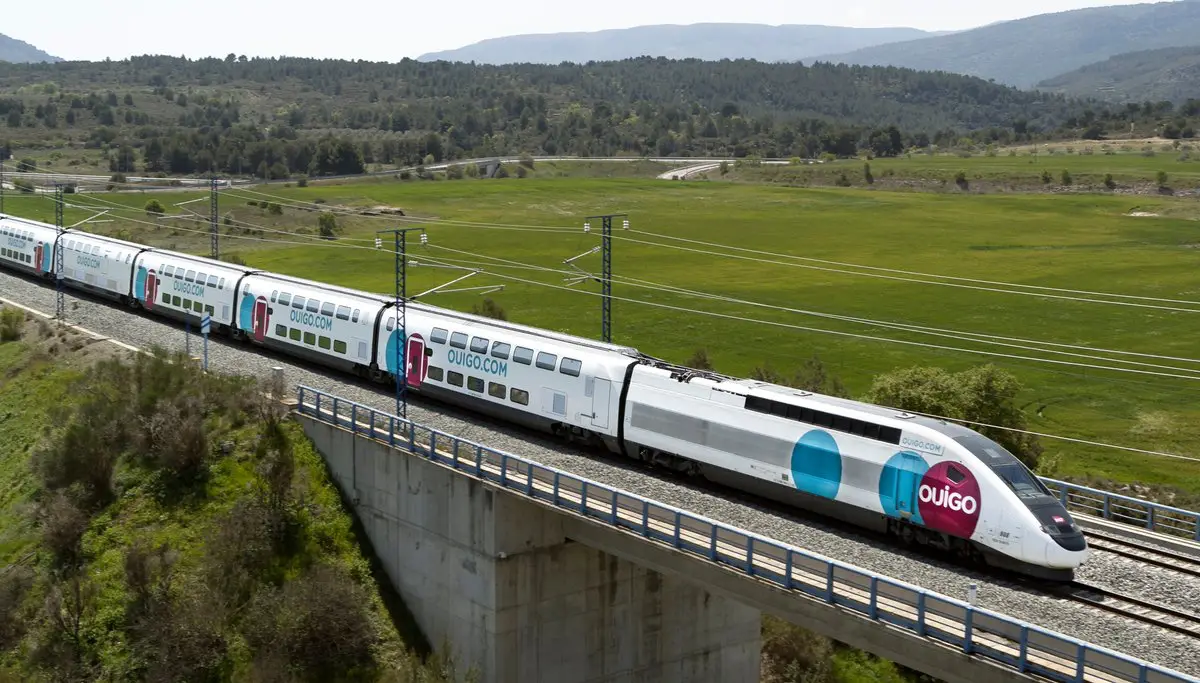
For generations, Europe’s charm has been defined by its borders—each train ride crossing cultures, cuisines, and landscapes. But within the next 15 years, those borders could begin to blur as the continent races to build a vast high-speed rail network that promises to make travel faster, greener, and more connected than ever before.
The European Commission has launched an ambitious plan to accelerate high-speed rail development across the EU, aiming to halve travel times on many popular routes and reshape how Europeans move. Announced by Commissioner for Sustainable Transport and Tourism Apostolos Tzitzikostas, the plan sets out a 2040 target for a unified, interoperable network that links capitals and regions with trains exceeding 250 km/h—offering passengers an alternative to short flights and long car journeys.
“High-speed rail is not just about cutting travel times—it is about uniting Europeans, strengthening our economy, and leading the global race for sustainable transport,” said Tzitzikostas. “With today’s plan, we are turning ambition into action: breaking down barriers, mobilising investments for modern infrastructure, and making cross-border rail the backbone of a carbon-neutral, competitive, and secure Europe.”
A Network to Halve Travel Times by 2040
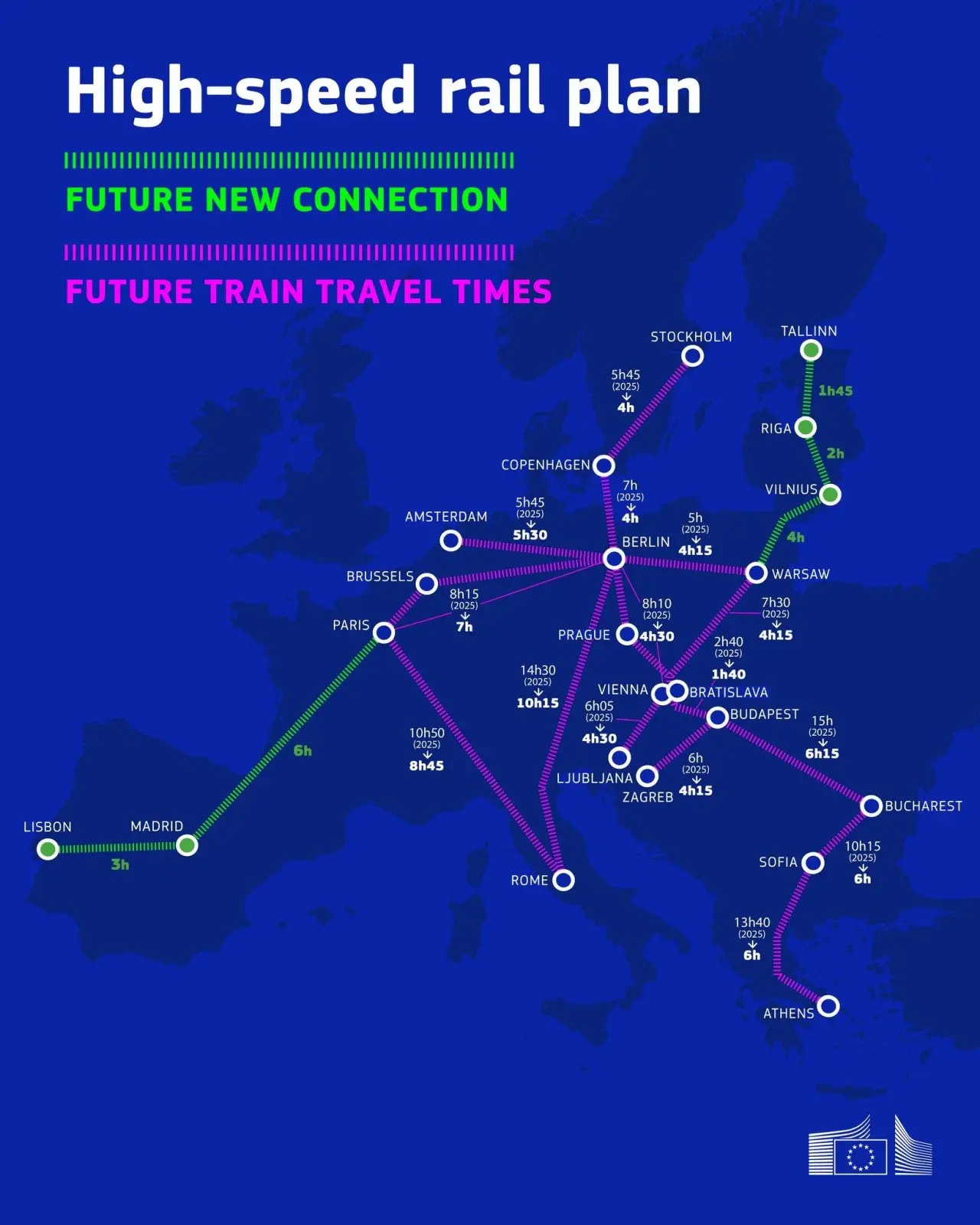
The initiative builds on the trans-European transport network (TEN-T) and supports the EU’s twin goals of becoming carbon-neutral by 2050 and enhancing competitiveness. According to the Commission, the new network could reduce journey times by up to half on many routes. By 2030, travellers should be able to go from Berlin to Copenhagen in four hours instead of seven, while by 2035, Sofia and Athens could be just six hours apart—down from nearly 14 hours today. A future cross-border corridor would also allow passengers to journey from Paris to Lisbon via Madrid in record time.
The plan also includes long-discussed connections such as Madrid–Lisbon, which will cut travel to roughly three hours, and routes like Berlin–Vienna and Copenhagen–Berlin, where travel times could drop to under five hours. In total, Brussels aims to integrate over 12,000 kilometers of high-speed rail lines, expanding access to regions of Central and Eastern Europe that have long lacked fast, direct connections.
The Commission outlines four key pillars for achieving the 2040 vision:
1. Accelerating Investment and Interoperability
Brussels will impose binding deadlines by 2027 to eliminate cross-border bottlenecks and harmonise technical standards so trains can operate seamlessly across borders. Higher speeds above 250 km/h will be introduced where viable. A comprehensive High-Speed Rail Deal—a multilateral investment agreement involving member states, the European Investment Bank, and private partners—will coordinate funding sources and ensure the completion of TEN-T’s core network by 2040.
2. Building a Competitive and Accessible Rail Market
To make train travel more affordable and flexible, the EU will propose new legislation to expand a second-hand market for rolling stock and ban anticompetitive scrapping of safe, functional trains. A 2026 proposal will improve cross-border ticketing and booking systems, giving passengers easier access to multi-operator journeys and better protection of their rights. Brussels also plans to remove entry barriers for new high-speed operators by enforcing fair track access and transparent pricing structures, encouraging competition to lower fares.
3. Innovation and Workforce Modernisation
A 2026 Europe’s Rail research call will support the development of next-generation high-speed trains capable of operating seamlessly across the continent. The EU also intends to simplify train driver certification to allow cross-border operation, and roll out the European Rail Traffic Management System (ERTMS) through a harmonised deployment plan in 2026 to enhance digital safety and interoperability.
4. Strengthening Governance and Oversight
The plan calls for improved coordination among national infrastructure managers to optimise track capacity for long-distance routes. The Commission will establish a high-speed rail scoreboard to monitor progress and revise the mandate of the European Union Agency for Railways to streamline authorisations and remove redundant national rules. TEN-T Coordinators will lead roundtable discussions with stakeholders to resolve bottlenecks and track milestones.
Beyond Speed: A New Kind of European Journey
Beyond shorter travel times, the plan promises a range of benefits: easing congestion on conventional rail lines, improving regional and night train services, and even enhancing Europe’s security by enabling faster transport of goods and military logistics alongside civilian travel. The Commission says these efforts will create a resilient, interconnected Europe “where every citizen benefits from safe, reliable, and affordable rail travel.”
The project’s financial structure remains under development. The EU’s next long-term budget (2028–2034) allocates €51.5 billion for transport, but additional funding will come from structural funds, national budgets, loans from the European Investment Bank led by Nadia Calviño, and private investment. The High-Speed Rail Deal will formalise commitments to bridge this gap by pooling public and private resources under a unified financing framework.
For travellers, the outcome could redefine how Europe is experienced. Weekend trips between Berlin and Vienna or Munich and Rome could become as easy as a domestic flight—without the emissions or airport delays. Faster trains will not only reduce short-haul air demand but also expand access to new destinations across the Baltics, Balkans, and Iberia, giving both residents and visitors more sustainable ways to explore.
As Europe prepares to invest in what could be its most transformative transport project in decades, the promise extends far beyond speed. It’s about knitting together a continent—one high-speed connection at a time.