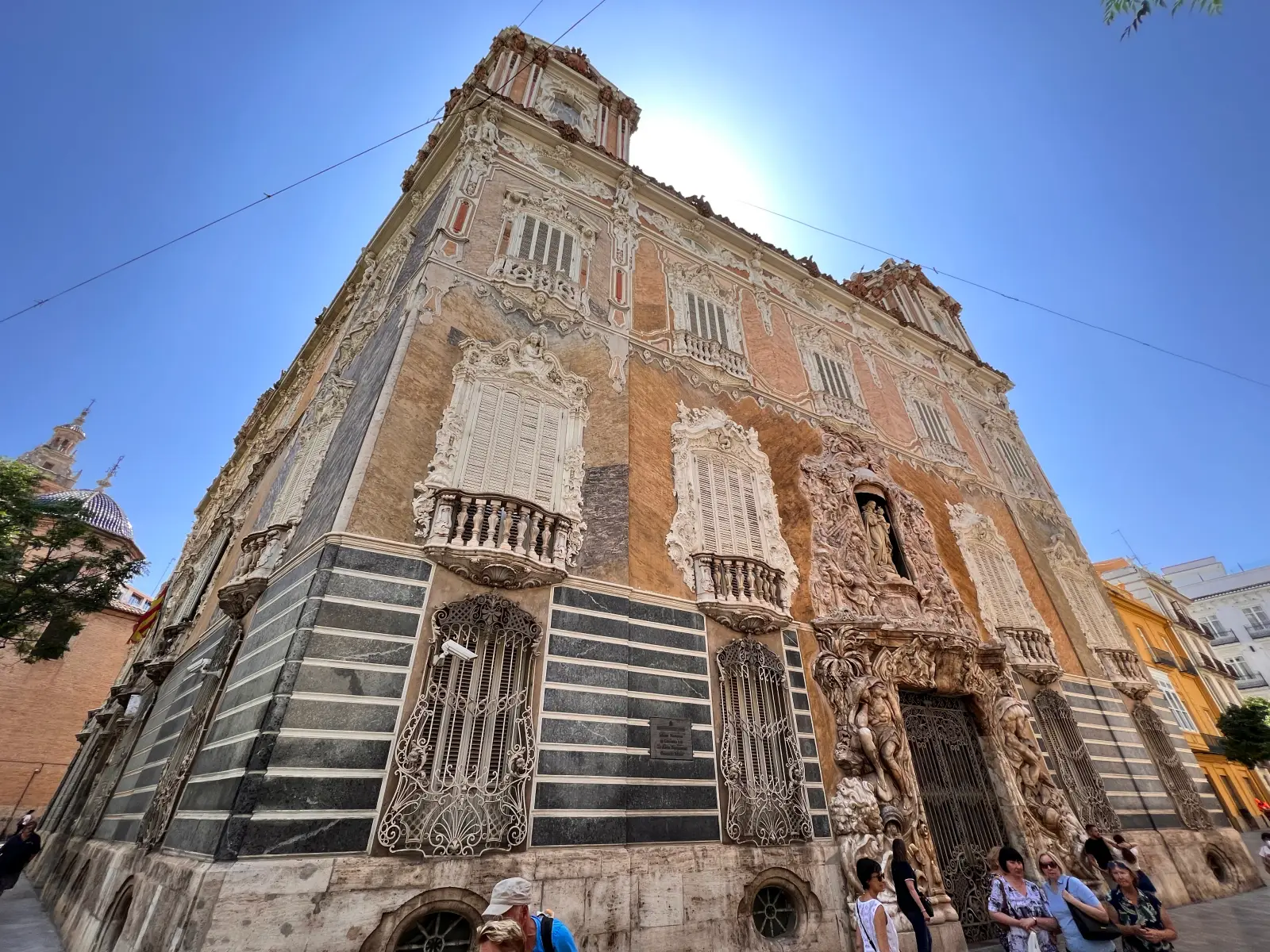
Valencia’s Palacio del Marqués de Dos Aguas is drawing growing attention from visitors as one of the city’s most distinctive historic landmarks, combining centuries of history with elaborate rococo design. The palace, located in the heart of the city between Poeta Querol and La Paz streets, dates back more than 500 years and today houses Spain’s National Museum of Ceramics.
For travellers, the site offers a unique mix of architecture, history and art in one visit, making it an increasingly popular stop in Valencia’s old town. Its richly decorated façade and opulent interiors are often compared to the Palace of Versailles, adding to its appeal among those seeking lesser-known attractions.
The building’s current appearance dates largely to the 18th century, when it was remodelled in 1740 by Giner Rabassa. However, its origins go back much further, with evidence of a Gothic manor on the site around 1400 and the discovery of a Roman-era necropolis during later renovations.
Designed around a central courtyard and flanked by towers, the palace reflects the wealth and status of the marquis who commissioned its transformation. Visitors are often struck first by the highly ornate baroque façade, while inside, the design blends rococo, neo-imperial and chinoiserie elements.
In addition to its architectural features, the palace showcases a collection of 18th-century carriages and serves as the National Museum of Ceramics. The museum displays a wide range of decorative arts, making it a key destination for art enthusiasts.
The palace is open to the public from Tuesday to Sunday, typically between 10:00 and 14:00 and 16:00 and 20:00, with reduced hours on Sundays. As more travellers explore Valencia beyond its most famous landmarks, the Palacio del Marqués de Dos Aguas is emerging as one of the city’s standout cultural attractions.