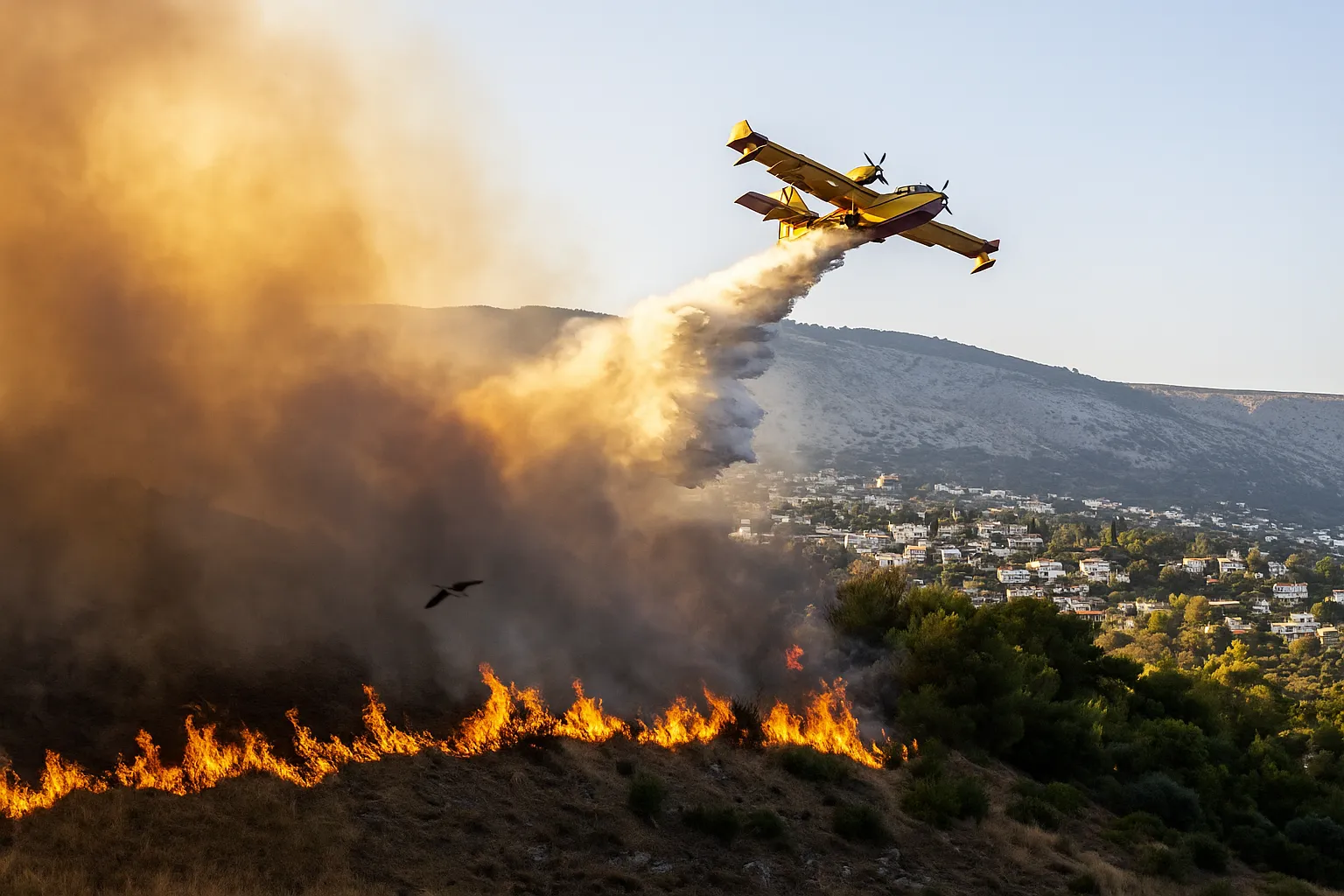
The sunny port of Chios, with its quaint medieval villages and famous mastiha resin, has been a picture‑perfect Greek island escape — until the skies turned gray with smoke and the calm of summer was shattered. Wildfires erupted last Sunday in three separate locations around Chios town, and by Tuesday the country declared a state of emergency as flames raced across forests and farmland. Tourists and locals alike received evacuation alerts on their phones. Now, ferries replace beach days, and holiday plans are on hold.
Fire crews from Athens, Thessaloniki, Lesbos and elsewhere joined local teams, swelling firefighting numbers to nearly 450 with 85 engines, 11 helicopters, eight aircraft, and support from military and police units. Strong northerly winds fanned the flames, causing evacuation alerts for 16 villages and sidelining the island’s key industry: mastiha production.
The forest fire that has been ongoing for three days and has caused evacuations in some villages on the island of Chios has been brought under control as of this morning (June 25).
Authorities are even investigating arson, with reports of petrol cans found near flare‑up sites — a worrying sign that these wildfires may not be natural. Ioannis Kefalogiannis, Minister of Climate Crisis and Civil Protection of Greece, warned that organised criminal activity would face serious legal consequences.
What Travelers Should Know Now
If you had a trip planned to Chios this week, here’s a clear snapshot of what’s happening, and what steps you can take:
- Flight and ferry schedules: Chios Island National Airport is still open, with most flights operating as scheduled. However, smoke and firefighting operations could cause sudden delays. Ferry services continue, but may be paused for safety reasons. Always check ahead.
- Evacuation notices: Mobile alerts dispatch information in Greek and English. If you’re in one of the 16 villages near Chios town—especially in the southwest—be prepared to leave on short notice. Local officials may reroute you to safer shelters.
- Accommodation impact: Many hotels and Airbnbs in affected zones have already offered flexible re‑booking or full refunds. Confirm with your provider and keep a written record of any policy updates.
- Health and air quality: Even areas outside active fires are suffering haze. Sensitive travelers—like children, older adults, or those with respiratory conditions—should carry masks, stay indoors when possible, and consider relocating temporarily.
- Insurance and refunds: Your best protection is travel insurance with natural disaster coverage. Check your policy. Some airlines may refund or re‑route passengers even without official travel‑warning advice .
Why It’s Happening — And What Made It Worse
Wildfires are nothing new in summer Greece. The official fire season lasts from May 1 to October 31, and this year Greece has hired an all‑time record 18,000 firefighters. Yet climate change is making each blaze more intense. The government is allocating more funds and resources to firefighting—following deadly past disasters, such as the 2018 Mati fire and Rhodes fires in 2023 .
This time, three separate ignitions grew into a single, massive blaze. Strong, dry northerly winds made control difficult. The flames threatened not just homes but the island’s signature mastic trees, which produce resin used in cuisine, cosmetics, and traditional medicine. Local officials fear long‑term damage to both the environment and the economy .
Threat of Arson Raises Alarms
Unlike typical lightning or heat‑driven flames, these fires started simultaneously in separate spots—an unusual pattern that authorities say “cannot be considered coincidental.” Petrol cans found near ignition points suggest arson, and a specialist arson team is investigating. Greek officials have promised that any perpetrators will face serious charges .
Climate Minister Ioannis Kefalogiannis stated that the government is “very seriously examining the possibility of an organised criminal act” and is doubling police and military patrols. That’s a sharp reminder that even holiday paradises are not immune to darker threats.
Local Impact — Beyond the Flames
The wildfires have disrupted more than just travel plans. An estimated 16 villages received evacuation orders. Some are now deserted; others are hosting displaced families. Utilities have been affected, with sporadic power cuts and water shortages reported. Ferry terminals, shops, and cafes lie under a thin veil of ash.
The suspension of tourism puts strain on an island that relies heavily on summer visitors. Hotels are emptying out, excursion operators are facing cancellations, and the hospitality workforce is seeing reduced hours. The ongoing haze and suspicious fires risk tarnishing Chios’s reputation among travelers.
When It’s Safe—And How to Help
As of now, firefighting crews are working intensively to steady the flames. Officials believe the worst may pass in a few days if winds soften. Still, travelers should monitor local updates—especially from Greece’s official emergency accounts (@112Greece) and the Greek Civil Protection agency.
Once areas are declared safe, visitors can help by returning responsibly. Consider supporting the island by rebooking stays, choosing local businesses, and avoiding entry to damaged forests. Community tourism—visiting relocated villages, buying mastiha products, and dining at unaffected taverna tables—will help recovery.
Tips for Travelers in Greece Right Now
| What to Do | Why It Matters |
|---|---|
| Subscribe to emergency alerts | You’ll get real‑time evacuation or safety information. |
| Check flights & ferries | Transport may still operate but can be stopped at short notice. |
| Pack masks & first‑aid | Helps with smoke irritation and unexpected incidents. |
| Stay or relocate wisely | Consider relocating temporarily if haze is thick. |
| Support local businesses | Your spending helps an island recovering from crisis. |
A Word to Future Travelers
Travel in a warming world may mean vacation plots don’t always go according to plan. Yes, wildfires can erupt, ash can fall on beaches, and evacuation text can pop up on your phone instead of concert schedules. But resilience also shines through—during evacuation, locals and tourists alike banded together, with food, shelter and shared camaraderie. That’s the heart of travel: people connecting—even when airports are closed.
Chios will recover. Its villages will reopen, cafes will steam coffee again, and the scent of fresh pastries will once again fill the air. But this June, travelers must accept that paradise can shift—sometimes in the blink of an ember. Keep informed, stay flexible, and when you return after the smoke clears, you’ll be supporting a community that stood strong through fire.