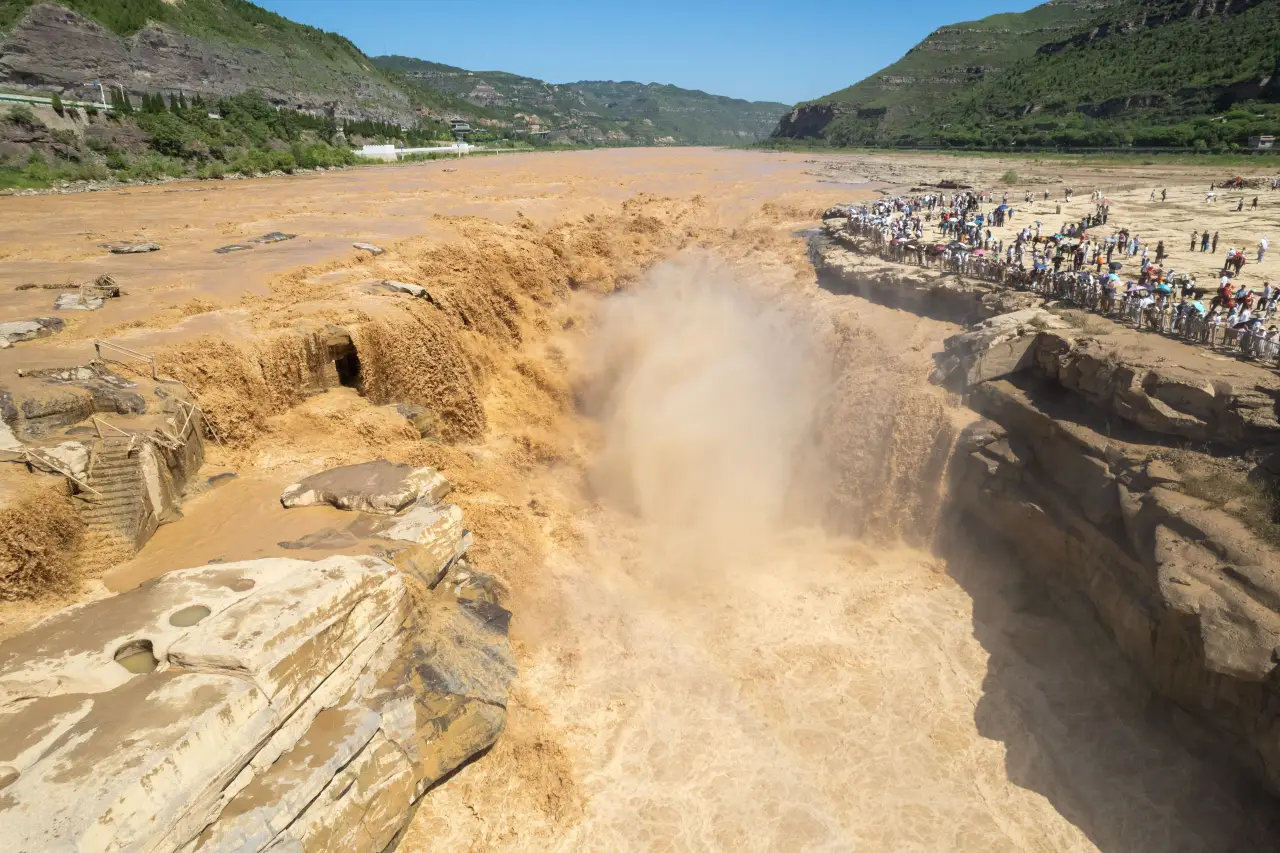
Heavy autumn rains have transformed Hukou Waterfall on China’s Yellow River into a roaring natural spectacle, drawing tens of thousands of visitors in early October. The surge in water volume, caused by continuous rainfall in the river’s upper reaches, has turned the famous site at the border of Shanxi and Shaanxi provinces into a single, powerful cascade.
According to local tourism authorities, the increased flow has caused the waterfall’s main and secondary streams to merge, producing a dramatic thunderous effect visible from both sides of the river. The natural display coincided with China’s National Day and Mid-Autumn Festival holiday period, when the scenic area recorded visitor peaks of around 30,000 people per day.
Record Crowds During Golden Week Holidays
During the first week of October, travelers from across China flocked to Hukou to witness the waterfall’s heightened flow and mist-covered gorge. Local media reported long queues at viewing platforms and steady tourist traffic along the Yellow River scenic highway. Officials said the site operated at full visitor capacity throughout the week under daily caps set to manage crowds safely.
Authorities introduced a limit of 30,000 visitors per day to protect the environment and ensure safety during peak travel days. Scenic area staff organized extended operating hours and increased shuttle bus frequency to handle demand. Cultural performances, folk music, and patriotic singing events were also held to enhance the holiday atmosphere, according to state broadcaster CGTN.
Images and videos of the surging waterfall, shared widely on Chinese social media, showed tourists wearing ponchos as they stood in the spray from the rising Yellow River. Reuters photographs from early October captured visitors braving light rain at viewing decks in Jixian County, Shanxi Province, as brown torrents cascaded down the narrowing riverbed.
Nature’s Power on Full Display
The flow increase followed weeks of persistent rainfall in the Yellow River basin. Water levels at Hukou rose sharply as upstream discharge from reservoirs combined with autumn precipitation. The result has been one of the most powerful displays of the year, with mist, noise, and turbulence filling the gorge between Shanxi’s Jixian County and Shaanxi’s Yichuan County.
Local meteorological services said river flow rates in late September and early October reached their highest levels of the season. The waterfall’s width expanded as surging water overwhelmed rock formations that normally divide the current, creating a single unified cascade more than 50 meters wide.
Videos shared by visitors also showed flocks of migratory birds passing over the site on October 8, coinciding with the waterfall’s peak flow. The images quickly went viral on Chinese news platforms, adding to the spectacle’s national visibility and boosting interest in the region’s autumn tourism season.
Symbol of the Yellow River’s Force
Hukou Waterfall, known as the largest waterfall on the Yellow River and the second largest in China after Guizhou’s Huangguoshu Falls, is a symbol of the river’s raw power. The site attracts millions of tourists each year, particularly during spring and autumn when the river’s flow is at its strongest. Its name, meaning “kettle spout,” refers to the way the river narrows and drops suddenly, sending water surging through a constricted gorge like steam from a boiling pot.
Local officials said the autumn increase in visitors reflects both improved infrastructure and renewed post-pandemic interest in domestic travel. “The enhanced viewing platforms and transport links have helped make Hukou more accessible while ensuring safety during high water levels,” said a spokesperson for the scenic area management office, as cited by Chinese media reports.
Authorities have urged visitors to adhere to safety guidance and avoid restricted zones near the edge of the viewing cliffs. Security staff have been deployed along pathways, while barriers have been reinforced to prevent overcrowding near the most popular observation points.
Though unrelated to Hukou directly, travel analysts note that the story reflects a broader public fascination with the extremes of travel and infrastructure use, particularly as global mobility rebounds after years of restrictions.
As autumn draws to a close, Hukou Waterfall typically transitions into its winter season, when temperatures in northern China drop and the site becomes known for partially frozen cascades. Local tourism offices have already begun preparing for the next wave of visitors seeking to witness the rare combination of ice and rushing water that forms during the colder months.
Tourism authorities in Shanxi and Shaanxi said they plan to continue regulating visitor numbers while promoting sustainable tourism development around the Yellow River basin. With rainfall expected to ease in late October, experts predict water levels will gradually recede, offering visitors a calmer yet equally scenic view of one of China’s most iconic natural landmarks.
For now, the surge in autumn visitors and the waterfall’s thunderous display underscore the enduring appeal of Hukou as both a symbol of the Yellow River’s strength and a key attraction in China’s growing domestic tourism landscape.
Photo Credit: Wirestock Creators / Shutterstock.com